.png)
My Wild Ride to 1,000 YouTube Subscribers in 3 Days (and What I Learned Along the Way)
Let's get real – I didn't expect posting my first batch of YouTube Shorts would send my phone buzzing nonstop. It felt like buying a lottery ticket and actually winning (okay, not millions, but 1,000 subscribers in just three days is its own kind of jackpot). The kicker? The same trick worked for my friend, catapulting her channel from sleepy to thriving. What you're about to read isn't theory – it's pure lived experience, equal parts giddy and frantic. And trust me: there are plenty of lessons they don't tell you in all those slick YouTube advice videos. So, let me spill it all – the method, the quirks, and the behind-the-scenes weirdness. Popcorn ready? The Fast Lane: One (Supposedly) Simple Trick to Explode Your YouTube Growth Let me take you behind the scenes of my wild ride to 1,000 YouTube subscribers in just three days. If you’ve ever felt stuck at a few hundred subs, endlessly refreshing your analytics and wondering what you’re missing, you’re not alone. I was right there with you—until I stumbled on a method that turned my channel’s growth from a slow crawl to a full-on sprint. And the best part? It’s not complicated. In fact, it’s just one thing: posting 10-15 YouTube Shorts every single day. How 10-15 YouTube Shorts Daily Changed Everything I know it sounds almost too simple, but hear me out. When I started uploading 10-15 Shorts a day, my channel went from gaining a handful of subscribers each week to over 1,000 new subscribers in just three days. That’s not an exaggeration. As I like to say: "This channel was literally getting over one thousand subscribers within just three days." And it wasn’t just me. I shared this method with a friend whose channel had been stuck at 1,700 subscribers. She followed the exact same approach—just Shorts, nothing fancy—and shot past 2,000 subs in no time. No magic, no secret hacks, just a consistent posting schedule and a focus on Viral Shorts. The Recipe for Viral Shorts: Simple, Repeatable, Effective So, what’s the actual process? Here’s the step-by-step recipe I used (and still use) for explosive YouTube growth: Find Catchy Content: I started by hunting down viral Instagram reels—think wedding moments, mouthwatering food clips, or trending celebrity snippets. The key is to choose topics that are already getting lots of attention. Research shows that trending topics perform exponentially better in Shorts format. Download Without Watermark: Using apps like IG Saver or InSaver, I saved these videos directly to my phone. No watermark means fewer copyright headaches and a cleaner look for your Shorts. Upload as YouTube Shorts: I re-uploaded these clips as Shorts, making sure to optimize each one with smart titles, relevant hashtags (like #wedding, #viralshorts), and trending music. The YouTube Shorts algorithm in 2025 loves content that grabs attention fast, so I always aimed for a strong hook in the first few seconds. Repeat 10-15 Times Daily: Consistency is everything. I posted 10-15 Shorts every day, targeting peak hours for my audience. Studies indicate that a consistent posting schedule maximizes reach and subscriber growth. What Kind of Content Works Best? You don’t have to stick to weddings or food. Anything that’s viral, catchy, and safe (no copyright issues) can work. For me, wedding and food videos were goldmines, but my friend found success with celebrity moments and trending challenges. The main thing is to focus on attention-grabbing content—the kind that makes people stop scrolling. Why This Works: The Science Behind the Surge Research shows that YouTube Shorts are ideal for rapid audience growth and boosting brand awareness. The algorithm favors quick, engaging content with strong hooks. By posting frequently, you increase your chances of hitting the right trend at the right time. Plus, optimizing your titles and hashtags is critical for discoverability and SEO. On my main channel, I now have over 16,000 subscribers and more than 1,000 Shorts posted—almost all of my growth came from this simple system. My friend’s channel, too, jumped from 1.7k to over 2k subscribers just by sticking to this routine. Pro Tips for Maximum Impact Always use trending music and hashtags to boost your Shorts’ reach. Keep your videos short, punchy, and visually appealing—first impressions matter. Don’t worry about copyright if you’re using watermark-free, safe content. Track your analytics to see what’s working and double down on those topics. If you’re serious about YouTube channel tips that actually work, this is one of the fastest ways to boost audience engagement and hit that coveted 1,000-subscriber milestone. It’s not glamorous, but it’s effective—and it’s the same method both my friend and I used to break through the early growth plateau. Monetization Mess: Why Chasing Shorts Fame Can Stall Your Real YouTube Earnings When I first started experimenting with YouTube Shorts, I was blown away by how quickly my subscriber count shot up. In just three days, I hit 1,000 subscribers, and before I knew it, I was well past the 2,000 mark. It felt like I’d cracked the code for YouTube growth. But as I dug deeper into monetization strategies and long-term content strategy, I realized there was a hidden cost to this rapid success. Let me walk you through what I learned—and why relying on YouTube Shorts alone can actually stall your real YouTube earnings. The Dark Side of Shorts: Subscribers Who Don’t Stick Around On the surface, Shorts seem like a dream come true. They’re quick to make, easy to share, and the YouTube Shorts algorithm in 2025 is more dynamic than ever, favoring content that grabs attention fast. But here’s the catch: most subscribers gained from viral Shorts aren’t interested in your long-form content. They might hit subscribe after a funny or trending clip, but when you upload a 10-minute video, they’re nowhere to be found. This is a huge problem if you’re serious about monetization. Research shows that YouTube only counts watch hours from long-form videos toward monetization. So, even if you have thousands of subscribers from Shorts, your watch hours may still be far below the 4,000-hour threshold needed to join the YouTube Partner Program. It’s like running a bakery that gives away thousands of free samples—everyone loves the taste, but not everyone comes back to buy the whole cake. My Experiment: The Pivot After 2,000 Subscribers After hitting 2,000 subscribers with Shorts, I decided to take a drastic step. I started deleting or setting all my Shorts to private. Why? Because leaving them up would keep attracting subscribers who weren’t interested in my main content. I wanted to shift my channel’s focus back to long-form content—the kind that actually builds loyal fans and counts toward monetization. This wasn’t just a theory. I’d seen it play out with friends and other creators I’d advised. The pattern was always the same: Shorts bring in a flood of subscribers, but very little engagement on long-form videos. If you leave Shorts up, you get more subs, but less engagement where it really counts. Key Lessons from My Journey Watch hours from Shorts don’t count toward monetization. You could have 100,000 hours from Shorts, and it wouldn’t move the needle for your channel’s earnings. Long-form videos pay significantly more than Shorts. As I learned firsthand, “Short videos don’t pay too much when it comes to YouTube. Short videos pay tpens.” Flooding your channel with Shorts can dilute your audience. You end up with a subscriber base that isn’t invested in your main content. Successful transition means pivoting to personal, original videos. After the initial Shorts blitz, I focused on my own stories and insights. This helped me attract viewers who actually cared about my long-form content and were more likely to stick around. Why Monetization Strategies Must Evolve If you’re serious about building a sustainable YouTube channel, you need to master both Shorts and long-form content. Shorts are great for rapid audience growth, engagement, and brand awareness. But when it comes to real revenue and building a loyal audience, long-form content is the backbone. Studies indicate that creators who successfully transition from Shorts to long-form videos see better engagement, higher watch hours, and more meaningful monetization. My advice? Use Shorts as a launchpad, but don’t get stuck there. Once you hit your subscriber goal, start removing or unlisting Shorts and double down on your long-form content strategy. This way, you’re not just chasing numbers—you’re building a real community and setting yourself up for long-term success on YouTube. Short videos don't pay too much when it comes to YouTube. Short videos pay tpens. Remember, it’s not just about getting people in the door. It’s about giving them a reason to stay, watch, and become true fans of your channel. Pitfalls, Tweaks, and All the Weird Little Details No One Mentions When I first set out to hit 1,000 YouTube subscribers in just three days, I thought I had a solid content strategy. I’d read all the YouTube Shorts tips, watched countless tutorials, and mapped out my upload schedule. But what no one really tells you—at least not in those shiny, fast-paced guides—are the tiny, oddball details that can make or break your journey. So, let’s get real about the behind-the-scenes hiccups, the tweaks that matter, and the strange little moments that shaped my experience. First off, beware of falling into the endless loop of Shorts, especially if you’re just recycling popular Instagram clips. It’s tempting, I know. You see other channels blowing up with borrowed content and think, “Why not me?” But here’s the thing: relying only on other people’s content is a short-term fix. Sure, you might see a quick spike in views and subscribers—especially if you’re posting 10-15 Shorts a day, which I did for a while—but it’s not sustainable. As I learned (sometimes the hard way), YouTube’s algorithm is always shifting. Research shows that while Shorts can drive rapid audience growth and boost brand awareness, long-term success comes from balancing Shorts with original, creative content that builds real audience engagement. Let me share a quirky story. One afternoon, I uploaded a batch of Shorts and waited for the views to roll in. Hours passed. Nothing. My heart sank. Was my channel broken? Had I been shadow-banned? Nope. I’d simply forgotten to set my Shorts to public. It’s such a tiny toggle, but it makes all the difference. This is one of those YouTube channel tips that sounds obvious until you’ve spent a whole day panicking over flatlined analytics. Always double-check your privacy settings, remix permissions, and comment toggles before you hit upload. It’ll save you a world of headaches. Another lesson: don’t get too comfortable with one type of content. I started out posting only Shorts, but after a while, my channel felt… stale. The numbers were there, but the energy wasn’t. That’s when I began rotating content types, mixing in longer videos, and—most importantly—asking my viewers what they wanted to see next. The feedback loop was eye-opening. Sometimes, their suggestions surprised me, and those experiments often led to my most successful videos. Studies indicate that genuine creator-audience dialogue is key for long-term YouTube growth. It’s not just about chasing metrics; it’s about building a community that actually cares about your content. Now, let’s talk about adaptability. What if YouTube changes its algorithm tomorrow? Would you be ready to pivot? The platform is notorious for sudden updates—what works today might flop next week. I learned to stay nimble, watching analytics closely and being willing to try new things. For example, after passing 2,000 subscribers, I made the tough decision to delete hundreds of Shorts that didn’t fit my evolving brand. It was scary, honestly. My channel felt empty for a moment, but it also felt more authentic. The audience that stuck around was there for me, not just the viral clips. Here’s a quote that stuck with me throughout this wild ride: "If you continue to do this over and over again and then you ended up monetizing your channel using short videos alone, at the end of the day, you're going to be making just tpens, you're not just going to be making so much money and for how long will you keep relying on people's content." That’s the reality. Shorts are powerful for growth, but if you want a channel that lasts—and actually pays off—you need to invest in your own voice and ideas. Consistency helps, but flexibility is even better for long-term harmony on YouTube. Start weaving in original content, keep an eye on those tiny settings, and never stop listening to your audience. Because, as I learned, the weird little details are what set you apart—and what keep your channel thriving, no matter how the algorithm changes. TL;DR: Nab 1,000+ YouTube subscribers FAST using Shorts, but know when to change lanes: start with volume Shorts for rapid growth, then shift focus to long-form originals for revenue and loyal followers.
Peter Oriyomi
Jun 12, 2025 • 11 Minutes Read


Jun 6, 2025
Unpacking Courage: A Real-World Look at Isaiah 41:10 and Why You’re Stronger Than You Think
Confession time: I once stared at the ceiling at 2AM, my thoughts racing through all the worst-case scenarios that might never happen. Sound familiar? If you’ve ever felt your worries spiral—or felt helpless in life’s storms—what if I told you an ancient promise could put real steel in your spine? Isaiah 41:10 hits different. Let’s dig in where faith and fear collide, and get honest about how this old-school encouragement can still rewind your panic and help you stand tall today. 1. Late-Night Worries Meet Ancient Wisdom: Why Isaiah 41:10 Cuts Through the Noise It’s late. The world is quiet, but your mind isn’t. Maybe you’re lying in bed, staring at the ceiling, replaying worries on a loop. Bills. Health. Family. The future. It’s as if the darkness outside makes your fears louder, more real. If you’ve ever felt this way, you’re not alone. In fact, people have been wrestling with these same late-night worries for thousands of years. And that’s exactly where the ancient wisdom of Isaiah 41:10 comes in—cutting through the noise, offering a promise that still matters today. Let’s be honest: everyone has those moments when anxiety creeps in and you feel helpless. You might not like feeling this way, but sometimes it’s hard to shake off. That’s why the meaning of Isaiah 41:10 is so powerful. This verse doesn’t just offer poetic comfort; it speaks directly to the heart of fear and feeling overwhelmed. It’s a message that says, “You don’t have to do this alone.” So do not fear, for I am with you; do not be dismayed, for I am your God. I will strengthen you and help you. I will uphold you with my righteous right hand. Think about that for a moment. “Do not fear.” “I am with you.” These aren’t just words—they’re God’s promises to you. Promises that reach across centuries, cultures, and circumstances. When Isaiah first spoke these words, he was addressing the Israelites in exile, a people at their lowest point, far from home and filled with uncertainty. Their world had fallen apart. Yet, in the midst of their suffering, God’s voice broke through: Do not fear. I am with you. Fast forward to today, and the struggles may look different, but the feelings are eerily similar. Modern anxiety and ancient fear share the same roots—feeling powerless, lost, and alone. That’s why encouragement from scripture like Isaiah 41:10 still resonates. It’s not about ignoring your problems or pretending everything is fine. It’s about knowing that, even when you feel weak, there is a strength greater than your own holding you up. Let me share a story—a simple one, but it stuck with me. Picture this: I’m driving home late at night, on a lonely stretch of road. My phone dies. No GPS, no way to call for help. The anxiety hits hard. I rummage through my wallet, searching for anything familiar, and find a wrinkled note. On it, scribbled in fading ink, are the words from Isaiah 41:10. In that moment, the verse wasn’t just comforting—it was practical. It reminded me that I wasn’t truly alone, even in the dark. I took a deep breath, calmed my nerves, and found the courage to keep going. That’s the real-world power of overcoming fear with faith. Isaiah 41:10 isn’t just for ancient exiles or Sunday mornings. It’s for you, right here, right now. When you feel like you’re at the end of your rope, this verse is a lifeline. “I will strengthen you and help you.” That’s not a vague hope—it’s a direct promise. Research shows that holding onto such encouragement from scripture can actually help reduce anxiety and build resilience. When you remind yourself of God’s promises, you tap into a source of strength that goes beyond your own limits. And then there’s this phrase: “I will uphold you with my righteous right hand.” In ancient times, the right hand was a symbol of power, protection, and justice. God’s “righteous right hand” means you’re not just being held—you’re being defended, supported, and cherished. It’s a reminder that you have value, that you matter, and that you’re never truly abandoned. So, the next time you find yourself wrestling with late-night worries, remember the meaning of Isaiah 41:10. Let it cut through the noise. Let it remind you that you are stronger than you think, not because you never feel fear, but because you are never facing it alone. God’s presence is unwavering. His promises are for you. And with that, you can face whatever comes—one step, one breath, one promise at a time.2. The Promise on Paper: When Faith Talks Louder Than Fear Let’s be honest—life throws curveballs that make even the bravest among us want to crawl under a blanket and hide. Job loss, illness, family drama that could win awards for awkwardness… you name it, you’ve probably faced it or know someone who has. In those moments, the world loves to hand you a stack of “motivational quotes.” You know the ones: “Keep calm and carry on.” “What doesn’t kill you makes you stronger.” Or my personal favorite, “Just think positive!” Sure, they sound nice, but when you’re in the thick of adversity, they can feel about as useful as an umbrella in a hurricane. But then there’s Isaiah 41:10—a promise that stands out from the crowd. It’s not vague. It’s not a platitude. It’s a direct message from God, tailored for moments when fear is loud and hope feels far away: “So do not fear, for I am with you; do not be dismayed, for I am your God. I will strengthen you and help you. I will uphold you with my righteous right hand.” This isn’t just a nice thought to stick on your fridge. It’s a lifeline. Research shows that Isaiah 41:10 was originally spoken to the Israelites during exile—a time when their world had crumbled, and hope was in short supply. God’s promise wasn’t just about personal comfort; it was about justice, restoration, and unwavering presence. The message was clear: God’s Promises are not empty words. They are the foundation for Finding Strength when the world feels upside down. Think about it. How many times have you heard “fear not” in scripture? It’s repeated again and again, not because God forgot He said it the first time, but because we need the reminder. Faith in adversity isn’t a one-time achievement—it’s a daily, sometimes hourly, choice. And Isaiah 41:10 is a verse that keeps showing up, whispering (or shouting) that you’re not alone. Lost your job and wondering how you’ll pay the bills? God’s presence is with you. Facing a diagnosis that makes your heart pound? God’s righteous right hand is holding you up. Walking into a family gathering that feels more like a battlefield than a reunion? God’s strength goes before you. Let’s get real for a second. Imagine you’re at your lowest—maybe sitting in your car, tears streaming down your face, feeling like you’ve hit rock bottom. Suddenly, you hear Isaiah 41:10. Maybe it’s a friend texting you the verse, or a song on the radio, or you stumble across it in a book. How would you respond? Would you brush it off as coincidence, or would you let it sink in? Would you dare to believe that Spiritual Guidance is reaching out to you, right in your mess? Here’s the thing: God’s “righteous right hand” isn’t just poetic language. In the context of scripture, it’s a symbol of power, protection, and justice. It’s God’s way of saying, “I’ve got you. I’m not letting go.” When you’re burned out, when you’ve got nothing left to give, that’s when His hand lifts you up. It’s the trustworthy extra push you need when your own strength fails. Remember that God's got your back. He's there to give you strength when you're weak and comfort when you're lost. No matter how tough life gets, remember that God’s got your back. He’s there to give you strength when you’re weak and comfort when you’re lost. When you feel like you can’t go on, lean on His promise. You’re never alone. God is with you, guiding you, lifting you up, and giving you hope. The beauty of Isaiah 41:10 is that it doesn’t sugarcoat reality. It acknowledges fear and dismay, but it doesn’t leave you there. It invites you to hold on, to trust that Faith in Adversity is more than wishful thinking—it’s a force that can carry you through the darkest valleys. God’s promises are specific, personal, and powerful. They remind you that you’re stronger than you think, not because you have it all together, but because you’re never facing life’s battles alone. 3. Courage That Lasts: What Happens When You Actually Take the Verse to Heart If you’ve ever found yourself weighed down by worry, you know how heavy life can feel. Maybe you’ve tried to shake off that sense of helplessness, only to find it clinging tighter. But what if there was a way to find real strength—a kind that doesn’t fade when things get tough? Isaiah 41:10 offers just that: a promise of spiritual strength and encouragement from scripture that meets you right where you are. The verse says, “So do not fear, for I am with you; do not be dismayed, for I am your God. I will strengthen you and help you. I will uphold you with my righteous right hand.” These words aren’t just ancient poetry. They’re a lifeline. When you let them sink in, something shifts. You start to realize that finding strength isn’t about pretending you’re never afraid. It’s about knowing you’re never alone in the fight. Research shows that God’s presence and promises are enough to bring hope and peace, even in the middle of chaos. Isaiah 41:10 was first spoken to people in exile, people who had every reason to feel abandoned. Yet, the message was clear: God’s help is real, and His support is unwavering. That same assurance is available to you. When you let this verse shape your approach to daily stress, you’ll notice changes—sometimes subtle, sometimes profound. Maybe you pause before spiraling into worry. Maybe you whisper the words to yourself before a hard conversation. Over time, you realize you’re coping with worry in a new way, drawing on faith in adversity rather than just your own willpower. Let’s get honest, though. Faith isn’t always a warm, fuzzy feeling. More often, it’s stubborn hope. There are days when doubts creep in, when you wonder if God really is holding you up. That’s normal. Faith is rarely about certainty; it’s about trust—trusting that God’s righteous right hand is there, even when you can’t see it. Think of it like this: you’re at the mental weight bench, lifting burdens that feel too heavy. God’s right hand is your invisible spotter, ready to catch the weight if you falter. You still have to push, but you’re never lifting alone. Sometimes, you need a physical reminder. Here’s a challenge: write Isaiah 41:10 somewhere unexpected. Maybe on your bathroom mirror, so it’s the first thing you see each morning. Or scribble it on your lunch bag, so it travels with you through the day. Even jotting it on a sticky note and tucking it in your wallet can make a difference. You might be surprised how often your eyes land on those words right when you need them most. It’s a simple act, but it can anchor you in moments of uncertainty, helping you remember your identity as one of God’s people and the power of trust that comes with it. As you keep coming back to this promise, you’ll find that spiritual strength grows quietly, almost unnoticed at first. The verse becomes more than just encouragement from scripture—it becomes a habit of the heart. You start to see that God’s love is stronger than any challenge you face. The fear doesn’t always disappear, but it loses its grip. You begin to persevere, not because you’re fearless, but because you know you’re upheld by something greater than yourself. Hold on to Isaiah forty one ten and let it fill you with peace and courage. Remember, God's love is stronger than any challenge you face. Stay strong and keep the faith. You've got this. In the end, courage that lasts isn’t about never feeling afraid. It’s about choosing, again and again, to trust in God’s promises. Isaiah 41:10 offers you tools for resilience and practical ways of coping with fear. When you let these words take root, you discover that you’re stronger than you ever imagined—because you’re never facing adversity alone. So keep the verse close. Let it remind you: hope is stubborn, faith is real, and you have more strength than you think.TL;DR: – Isaiah 41:10 isn’t just a poetic phrase—it’s a battle cry. Its promise still speaks: "Do not fear, for I am with you." Take it personally, lean in, and let hope start winning your internal battles.
11 Minutes Read
May 31, 2025
Hunger Relief with Heart: The Ripple Effect of One Meal
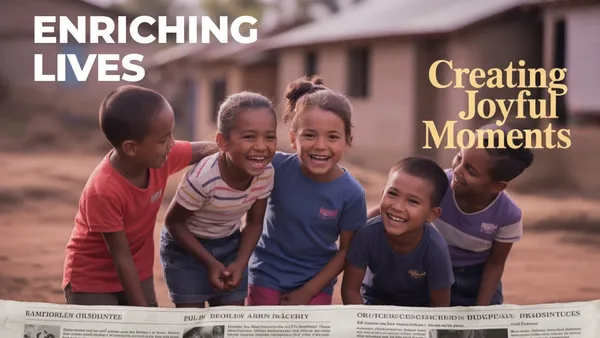
I'll never forget the first time I volunteered with a hunger relief program: a scuffed soccer ball rolled into my foot while I was unloading meal boxes, and suddenly, a group of smiling children who'd been waiting for lunch asked me to join their game. It reminded me—sometimes, hope isn't found in grand gestures, but in the small act of sharing a meal and a smile. Hunger persists despite the bounty around us, but real, human connections can fuel change. Today, let's explore how the simple act of feeding the hungry does more than nourish bodies—it enriches whole communities. Beyond Empty Stomachs: Feeding Hope, Not Just Bodies When I think about Hunger Relief, my mind doesn’t just picture empty plates or aching stomachs. It goes deeper. I remember the faces—children with wide eyes, mothers with tired hands, elders with stories etched in their wrinkles. Each meal we serve at Food for the Poor is more than just nourishment; it’s a spark of hope, a gentle reminder that someone cares. Sharing a meal, I’ve learned, often doubles as sharing hope. It’s a simple act, but its impact ripples far beyond the moment. There’s a special kind of magic that happens when a hot meal is placed in someone’s hands. I’ve seen it firsthand. The way a child’s posture changes, how laughter bubbles up in a crowd that was silent just moments before. Research shows that hunger relief programs have holistic benefits, nourishing both body and spirit. It’s not just about calories or nutrition—though those are vital. It’s about restoring dignity, sparking resilience, and reminding people that they belong. At Feed the Poor Foundation, we’re committed to a vision of Community Enrichment that goes well beyond food. Our advocates travel from bustling cities to the most remote villages, carrying not only meals but also clean water, clothes, and shoes. We know that hunger doesn’t exist in isolation. It’s tangled up with poverty, lack of resources, and sometimes, a loss of hope. That’s why our approach is comprehensive. We believe that enriching lives is as important as filling stomachs. I remember one visit to a small village where the children ran barefoot, their feet calloused from years of walking on rough earth. We brought shoes that day, along with food and water. The joy was palpable—not just because their bellies were full, but because they felt seen and valued. It was a reminder that Hunger Relief isn’t just about food. It’s about human dignity, about making sure every person feels worthy of care and comfort. “We’re not just providing meals. We’re enriching lives one smile at a time.” This isn’t just a slogan for us—it’s a way of life. Every meal, every pair of shoes, every bottle of clean water is a message: You matter. And that message travels. It grows. It creates a ripple effect, touching not only the person who receives but also their family, their neighbors, their entire community. I’ve seen how a simple meal can spark joy in the most unexpected places. Sometimes, it’s the laughter that erupts around a shared table. Other times, it’s the quiet resilience that grows in someone who knows they’ll eat today. Studies indicate that initiatives including clothing and water alongside food offer broader community support. When we address multiple needs, we help people stand a little taller, dream a little bigger. Our work is powered by compassion and generosity. Donors and volunteers make it possible for us to reach further, to serve more. From the heart of the city to the farthest village, we’re united by a belief that no one should go hungry—and that everyone deserves a chance to thrive. We don’t just distribute food; we deliver hope, comfort, and a sense of belonging. The journey isn’t always easy. Sometimes, the need feels overwhelming. But every smile, every word of thanks, every moment of connection reminds me why we do this work. Hunger Relief is about so much more than food. It’s about building bridges, restoring faith, and lighting up the world—one meal, one act of kindness, one life at a time. If you’ve ever wondered whether your support makes a difference, let me assure you: it does. Every meal you help provide, every resource you help deliver, is a thread in the fabric of community. Together, we’re not just feeding bodies. We’re feeding hope, and in doing so, we’re changing the world. The Unsung Heroes: Volunteers and the Power of Small Gestures There’s a kind of magic that happens when you see a child’s eyes light up—not just from the gift of a meal, but from the simple act of being seen, of being cared for. I remember one afternoon, deep in a remote village, when we arrived with boxes of shoes. The children gathered, barefoot and curious, their feet dusty from the long walks they took each day. As we knelt down to help them try on their new shoes, something subtle but profound shifted. Their posture straightened. Their steps grew lighter. Confidence bloomed in their smiles. It was as if, in that moment, the world had whispered to them, “You matter.” This is the heart of Compassionate Giving. It’s not just about the shoes, the food, or the water we bring. It’s about the message behind every gesture: you are not forgotten. And it’s our volunteers—the unsung heroes—who carry this message from bustling cities to the most isolated corners of the world. They are the hands that deliver hope, the voices that offer comfort, and the hearts that inspire Community Support wherever they go. Volunteer Opportunities at Feed the Poor Foundation go far beyond serving food. Yes, there’s the joy of handing out a warm meal, but there’s also the quiet work behind the scenes: organizing supplies, listening to stories, connecting with families, and building trust. Sometimes, it’s simply sharing a smile or playing a quick game with a child. These small gestures, research shows, can spark a ripple effect—lifting spirits, building confidence, and motivating entire neighborhoods to come together. I’ve seen firsthand how a single act of kindness can transform lives. When a volunteer takes the time to listen, to empathize, or to share a laugh, it’s as if a window opens and light pours in. The atmosphere changes. Suddenly, there’s more than just relief from hunger—there’s hope, dignity, and a sense of belonging. As one of our volunteers put it, "We're creating an atmosphere of joy and happiness." These moments don’t happen by accident. They are the result of people choosing to show up, to give a little of themselves, and to believe that their time matters. Studies indicate that volunteers are the critical connectors between donors and recipients, ensuring that every act of Compassionate Giving reaches its intended heart. In fact, organizations like Feed the Poor Foundation and Feeding America rely on the energy and dedication of volunteers to sustain their programs and expand their reach. From 2019 to 2023, Food For The Poor alone served 943 million meals and distributed $3.2 billion in aid—numbers that are only possible because of the collective power of community support and volunteer action. But it’s not just about the numbers. It’s about the stories. The grandmother who receives a food basket and feels seen for the first time in months. The teenager who volunteers on weekends and discovers a passion for helping others. The neighborhoods that come alive with laughter and music when a delivery truck arrives, bringing not just supplies but a sense of celebration. These are the moments that remind us: Transforming Lives starts with small, intentional acts of kindness. And the beauty of it is, anyone can be part of this movement. Volunteer Opportunities are everywhere—whether it’s lending a hand at a local food bank, organizing a clothing drive, or simply reaching out to a neighbor in need. Every gesture, no matter how small, contributes to a larger tapestry of hope and healing. Smiles are contagious, and so is compassion. When one person steps forward, others are inspired to do the same. Before you know it, an entire community is moving together, fueled by the belief that change is possible. From the city streets to the quietest villages, our advocates bring food, water, clothes, and shoes to men and women, children of all backgrounds. They remind us that Community Support is not just a concept—it’s a living, breathing force that can lift people out of despair and into a future filled with possibility. In the end, it’s the volunteers—the unsung heroes—who show us that the power to transform lives lies within each of us, waiting to be shared, one small gesture at a time. Sparking Change: How Your Support Creates Lasting Impact Sometimes, I pause and wonder: what if every one of us skipped just one coffee a week and donated those few dollars instead? It’s such a simple act—barely a blip in our routines. But imagine the ripple effect. If hundreds, thousands, or even millions of people made that small choice, how many meals could we serve? How many children could go to bed with full stomachs, how many families could feel hope rising in their hearts? This is the power of Donations for Hunger. It’s not about grand gestures or enormous sums. It’s about the collective strength of small, recurring kindnesses—each one building on the last, each one making a difference that stretches far beyond what we can see. At Feed the Poor Foundation, I’ve seen firsthand how food aid programs become the backbone of hunger relief. Research shows that donor-supported initiatives like ours are what keep hope alive in communities facing hardship. We don’t just deliver meals; we bring clean water, clothing, and shoes to those who need them most. Our reach extends from bustling cities to the most remote villages, uniting people from all walks of life. Every time we hand out a meal or a pair of shoes, we’re not just meeting a physical need—we’re sending a message: you matter, and you are not forgotten. But our mission is about more than just handouts. We believe in building community driven solutions that last. True change happens when people are empowered to lift themselves up, when local leaders and families become part of the solution. That’s why we invest in sustainable solutions—programs that teach skills, provide resources, and nurture independence. When a community has the tools to grow its own food, access clean water, and support its most vulnerable members, the impact multiplies. It’s not just about feeding programs for today; it’s about planting seeds for a brighter tomorrow. Every donation, no matter the size, supports these sustainable solutions. I’ve learned that momentum matters. Humanitarian outreach depends not just on funds, but on the ongoing involvement and attention of people like you. When you give, you’re not just providing a meal—you’re joining a movement. You’re helping to create a wave of compassion that can sweep across continents. And as more people join in, the results are amplified. Local engagement and empowerment turn a simple act of giving into a force for lasting transformation. The numbers are staggering. Organizations like Food For The Poor have served nearly a billion meals in just a few years, and Feeding America’s campaigns have secured billions more. But behind every statistic is a story—a mother who can feed her children tonight, a child who can focus in school because he’s not hungry, a village that feels hope for the first time in years. These are the moments that remind me why we do this work. They are proof that compassion and generosity can make a tangible difference, even in a world where hunger still persists. I often return to a simple truth: "When we feed the body, we nourish the soul. Join us in spreading smiles across the globe." It’s more than a motto—it’s a call to action. Every meal distributed, every act of kindness, is an opportunity to spark transformation. It’s a chance to spread joy, to inspire hope, and to change lives—one smile at a time. So, I invite you to be part of this movement. Let’s keep nourishing bodies and enriching lives, together. Visit feed the poor dot world to donate now. Your support, no matter how small, can help bring light, happiness, and hope to every corner of the world. Together, we can spark change that lasts—not just for a moment, but for generations to come. TL;DR: If you can put food on your table, you can also put a smile on someone else's. Supporting hunger relief goes far beyond meals—it's about dignity, community, and hope. Every donation or volunteer hour has the power to ripple out and change lives for the better.
11 Minutes Read

May 28, 2025
Beyond Success: Discovering a Fulfilled Life Through God's Unique Purpose
A Message from Pastor Tunde OlayinkaI used to think a fulfilled life was all about ticking boxes: degrees on the wall, a successful career, and maybe a few trophies to boot. But then there was that late-night walk under a sky full of stars when I couldn’t shake the feeling that something was missing—something deeper. That’s when I tripped over Ephesians 2:10 and realized, wait, maybe there’s more to a ‘fulfilled life’ than what we chase on paper. What if real fulfillment comes from finding, and actually living, God’s unique purpose for you?Rethinking Fulfillment: Beyond the Trophy ShelfHave you ever reached a milestone you thought would change everything, only to feel a strange emptiness afterward? Maybe you finally landed that promotion, graduated with honors, or achieved a long-awaited breakthrough in your business or marriage. For a moment, there’s a rush—a sense of victory. But then, quietly, a question creeps in: Is this all there is?It’s a feeling many of us know but rarely talk about. Our culture tells us that a fulfilled life is built on stacking up achievements—trophies on a shelf, diplomas on the wall, promotions on our résumé. But what happens when the applause fades and the next morning feels just like the last? Research shows that fulfillment in life goes beyond material success; it involves living a life that honors God and contributes to the greater good.Achievement Doesn’t Guarantee ContentmentLet me share a story. Imagine you’ve worked for years to climb the corporate ladder. Late nights, missed family dinners, endless hustle. Finally, you get the promotion. Everyone congratulates you. There’s a new office, a bigger paycheck, maybe even a fancy title. But after the celebration, you sit alone at your desk and realize you don’t feel any more complete than you did yesterday. The emptiness is still there, just dressed in a nicer suit.You’re not alone. Many people experience this post-promotion emptiness. It’s a quiet reminder that personal breakthroughs—while valuable—don’t always lead to a meaningful life. They’re milestones, not destinations.Why Our Culture’s Definition of Success Doesn’t Always Add UpSociety has a formula for fulfillment: work hard, achieve more, collect rewards. But this formula often leaves us chasing the next big thing, never truly satisfied. We’re told that a fulfilled life is about education, business victories, political influence, or marital status. Yet, even when we check every box, something feels missing.Christian fulfillment, as research and scripture suggest, isn’t measured by the trophies on your shelf. It’s about discovering God’s purpose for your life and walking in it. That’s where true meaning is found. As C.S. Lewis once said:“We are all looking for meaning, but purpose is what gives direction to our search.”Scriptural Detour: There’s a Bigger Plan at PlayEphesians 2:10 offers a powerful reminder:“For we are his workmanship, created in Christ Jesus unto good works, which God hath before ordained that we should walk in them.”You are God’s unique creation—His workmanship. That means your life isn’t an accident, and your value isn’t defined by worldly achievements. God’s purpose for you is bigger than any title or accomplishment. He has prepared good works for you to walk in, works that bring lasting fulfillment and impact.When you align your life with God’s purpose, personal breakthroughs take on new meaning. They’re no longer just about your own success—they become opportunities to serve, to love, to make a difference. Studies indicate that personal breakthroughs often result from aligning one's life with divine purpose and seeking spiritual guidance. That’s where the journey toward a meaningful life truly begins.From Breakthroughs to Purpose: A Shift in PerspectiveMaybe you’ve been striving for years, hoping that the next achievement will finally fill the void. Or perhaps you’re just starting out, wondering what it means to live a fulfilled life. Wherever you are, consider this: fulfillment isn’t found in what you achieve, but in who you become as you walk in God’s purpose.Education, business, and relationships are important, but they aren’t the source of lasting joy.God’s purpose for your life gives meaning to every breakthrough and every setback.Christian fulfillment is about living for something greater than yourself.You were created for more than just collecting trophies. You were made to walk in the good works God has prepared for you. That’s where a truly meaningful life begins—beyond the trophy shelf, in the heart of God’s unique purpose for you.Finding Your ‘God Groove’: Uncovering Your Life’s True PurposeWhat if life fulfillment wasn’t about climbing ladders or collecting trophies? What if the deepest sense of joy came from discovering God’s Purpose for your life—and walking in it, step by step, even when it feels ordinary? Ephesians 2:10 whispers this truth: “For we are his workmanship, created in Christ Jesus unto good works, which God hath before ordained that we should walk in them.” You are not an accident. You are God’s masterpiece, uniquely shaped for a purpose that’s bigger than any worldly definition of success.Listening for God’s Direction: The Art of Tuning InSometimes, finding purpose feels like trying to catch a radio signal in a storm. But what if you could tune in, even just for a moment? Research shows that spiritual fulfillment often begins with simple, intentional practices that open your heart to God’s voice. You don’t need a mountaintop or a monastery. Try these practical—and maybe a little off-the-wall—ways to listen for God’s direction:Journaling: Write out your prayers, questions, and even your frustrations. Sometimes, clarity comes when you see your thoughts on paper.Silent Walks: Leave the headphones at home. Walk in nature, noticing the world God made. Let your mind wander and see what surfaces.Gardening Meditations: Digging in the dirt can be holy work. As you plant or pull weeds, ask God to show you what He’s growing in your life.These aren’t just spiritual “extras.” They’re invitations to pause, breathe, and check in with God—right in the middle of your everyday routines. I’ve found that even washing dishes or folding laundry can become sacred when I ask, “God, what are You saying to me right now?”‘Purpose Moments’: When You Feel Most AliveThink back: When was the last time you felt truly yourself—fully alive, even if just for a heartbeat? Maybe it was helping a neighbor, comforting a friend, or creating something beautiful. These are your ‘purpose moments’. They may seem small, but they’re often clues to your unique calling.Research indicates that finding purpose is less about grand gestures and more about recognizing these everyday sparks. God’s plan for your life isn’t hidden in some far-off future; it’s woven into the fabric of your daily actions. When you serve, encourage, or create, you’re stepping into the good works God prepared for you."The place God calls you to is the place where your deep gladness and the world's deep hunger meet." — Frederick BuechnerLet that quote sink in. Your “God groove” isn’t just about personal happiness—it’s about meeting the world’s needs with the gifts God has given you. That’s where life fulfillment truly begins.Good Works: Central to Your DesignIt’s easy to think of good works as something extra—something you do if you have time, or if you’re feeling especially “spiritual.” But Ephesians 2:10 says otherwise. You were created for good works. They’re not an add-on to your faith; they’re the very reason you were made.Studies indicate that Christians find meaning and spiritual fulfillment by aligning their lives with God’s plan and serving others. When you step into the good works God has prepared for you, you’re not just checking off a religious to-do list. You’re living out your true design. You’re echoing God’s creativity, compassion, and love in a world that desperately needs it.So, don’t underestimate the power of small acts. A kind word, a helping hand, a listening ear—these are the building blocks of a fulfilled life. Each one is a step in the path God has set before you.Checking In: Making the Mundane SacredHere’s a secret: you don’t have to wait for a “big moment” to find your purpose. Sometimes, the most profound encounters with God happen during the most ordinary routines. I often pause, even in the middle of a busy day, to ask, “God, am I in step with You?” That simple question can turn the mundane into the miraculous.Remember, you are God’s workmanship. You were created for a purpose. And every day, in every small act of love, you have the chance to walk in the good works He’s prepared for you. That’s the heart of spiritual fulfillment—and the beginning of a truly fulfilled life.Faith in the Real World: Good Works, Mistakes, and the Unexpected FulfillmentIf you’ve ever wondered whether your life is on the right track, or if a misstep has thrown you off God’s plan, you’re not alone. The Christian perspective on fulfillment goes far beyond the world’s definition of success. It’s not just about climbing ladders—whether in business, education, or even relationships. True fulfillment, as Scripture reminds us, is about discovering God’s unique purpose for you and walking in it, even when the path is winding or downright weird.Consider this: “For we are his workmanship, created in Christ Jesus unto good works, which God hath before ordained that we should walk in them.” (Ephesians 2:10) You are God’s masterpiece, crafted with intention, designed for good works that He’s already prepared. Sometimes, though, those “good works” don’t look like what you expected. Sometimes, they show up in the middle of what feels like a failure.Let’s be honest—life rarely goes according to plan. Maybe you’ve experienced it: that job interview you thought would change everything, only to walk out red-faced after mixing up the company’s name with their competitor’s. (Yes, that happened to me. I still cringe thinking about it.) At the time, it felt like the end of the world. But looking back, that detour was the nudge I needed to discover a calling I never would have considered otherwise. Sometimes, the doors that slam shut are the ones that steer you toward God’s real purpose for your life.Research shows that the Christian life is not about perfection, but about faith—about trusting that God’s plan is bigger than our mistakes. The Christian perspective encourages us to see every misstep, every awkward moment, as part of a greater story. Fulfillment isn’t found in never failing; it’s found in walking forward, believing that God can use even your most embarrassing moments for good.But what about the ordinary days? The truth is, good works aren’t always grand gestures. Sometimes, they’re as simple as forgiving a neighbor who borrowed your lawnmower and “forgot” to return it for three months. Or volunteering at a local shelter, not because you have to, but because you feel a tug on your heart. These small acts of service are the heartbeat of Christian living. They reflect God’s love in ways that ripple out further than you’ll ever see.I once found myself stuck in traffic behind a family of squirrels crossing the road. Annoyed at first, I realized—sometimes God uses the strangest detours to slow us down, to notice the world around us, to remind us that life isn’t always about getting from point A to point B. Maybe you’ve had your own “squirrel moments”—unexpected pauses that make you rethink your priorities or notice someone else’s need. Sometimes, the weird stuff matters most.If you’re wrestling with doubts or feeling like you’ve missed your shot, remember:“There is no pit so deep, that God’s love is not deeper still.” — Corrie ten Boom God’s plan is not derailed by your mistakes or detours. In fact, those moments might be the very places He meets you most powerfully.Living a fulfilled life, from a Christian perspective, means embracing the journey with all its twists, turns, and surprises. It’s about letting go of the pressure to be perfect and instead, choosing to walk in faith—open to God’s redirection, ready to serve, and willing to see purpose in the unexpected. Good works, after all, are not just tasks to check off a list; they are opportunities to reflect God’s love, to glorify Him, and to discover the deeper meaning He has woven into your story.So, if you find yourself on a detour, take heart. You are God’s workmanship, created for good works, and your life—quirks, mistakes, and all—is part of a plan bigger and more beautiful than you can imagine. That’s the real fulfillment. That’s the adventure of Christian living.TL;DR: At the end of the day, real fulfillment isn’t about breaking records or collecting milestones. It’s about seeking, finding, and living God’s unique purpose for you—because that’s where true meaning and joy take root, no matter the path your journey takes.Pastor Tunde OlayinkaJoin us to enrich Lives at FTP
11 Minutes Read
May 28, 2025
Beyond a Meal: How Kenya Turns World Feed The Poor Day into a Celebration of Hope
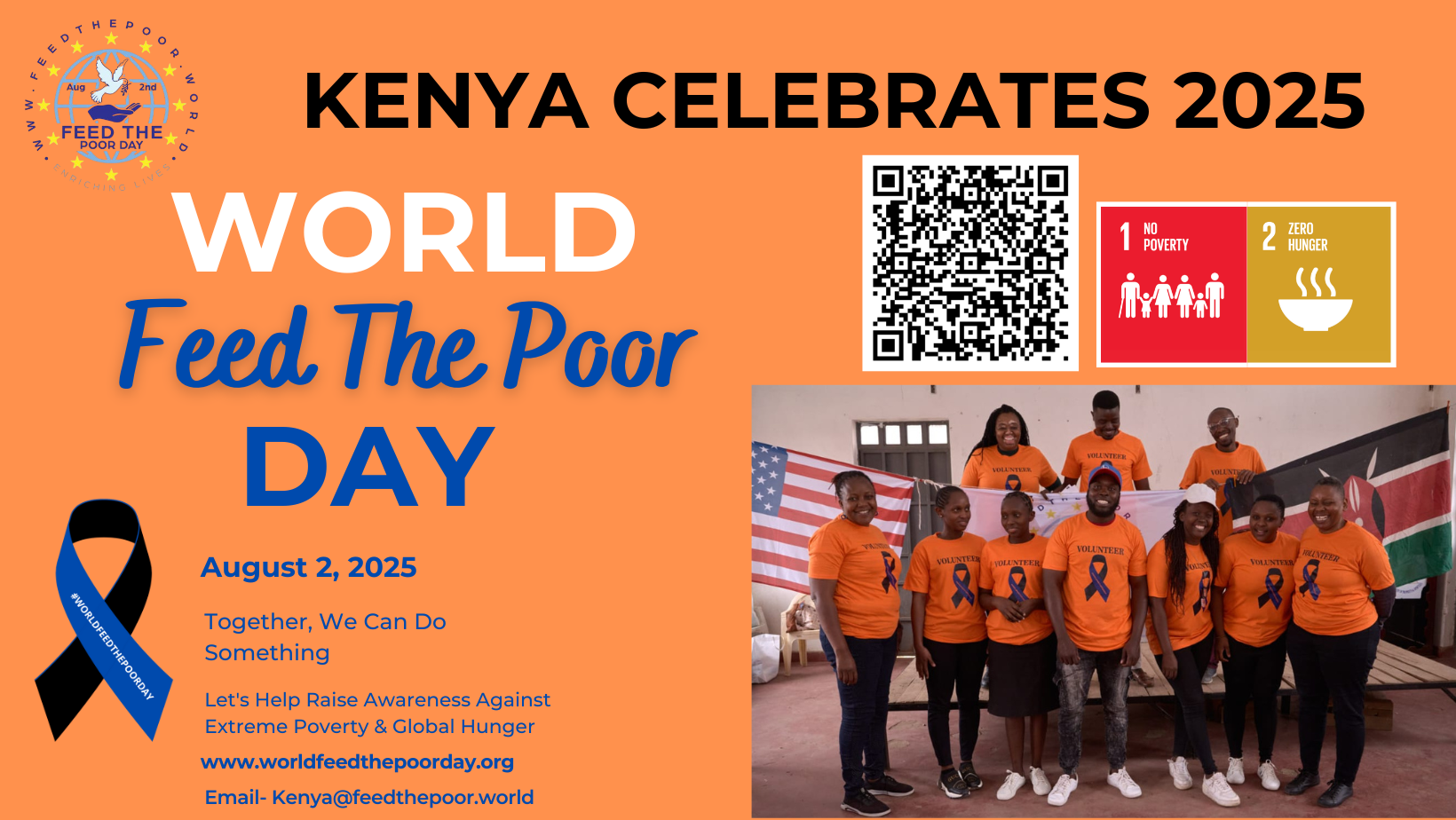
A few years ago, a young woman volunteered in Nairobi to make a difference. She accepted a call to serve those in need in her community. She put together other volunteers to join in helping the poor in Kenya. Lucy Mwangi is selfless in her approach to life. She joined Feed The Poor Foundation to extend the reach of World Feed The Poor Day to places never imagined. It was August 2nd, 2023, the sun was fierce, but laughter warmed the street more than the sky did. Local volunteers bustled about, handing out generous portions of ugali and sukuma to mark World Feed The Poor Day, a celebration that was somehow somber and joyous at once. What struck me was that no one seemed to be acting for the cameras; it was simply people feeding each other, neighbor by neighbor. Join me in uncovering what this day means in Kenya, and why ordinary acts can make an extraordinary difference.Section 1: More Than Just a Plate: The People Power Behind Food SharingWhen I think about World Feed The Poor Day in Kenya, it’s never just about handing out a meal. It’s about the people, the energy, and the hope that fills the air every August 2nd. Since 2023, Nairobi has joined the world in marking this day, and at the center of it all is Lucy Mwangi. She’s not just an organizer; she’s a force that brings together neighbors, friends, and even strangers, all united by the simple act of sharing food.Lucy Mwangi has become a familiar name in Nairobi’s community food distribution efforts. As the lead for World Feed The Poor Day in Kenya, she rallies volunteers from all walks of life. Some people arrive early to help cook, others set up tables, and a few even bring their children along to lend a hand. There’s no single way to help—everyone finds their place. The event is hands-on, direct, and deeply personal. I’ve seen people who have little to spare still show up with a bag of maize or a few loaves of bread, wanting to be part of something bigger.World Feed The Poor Day isn’t just a date on the calendar. It’s a movement that’s grown from the ground up. The day itself, August 2nd, is followed by a Thanksgiving event on August 3rd, turning what could be a one-off act into a two-day celebration of hope and gratitude. The Feed The Poor Foundation’s mission in Kenya is simple: help the poor, fight hunger, and support the United Nations’ Sustainable Development Goals—especially those focused on ending poverty and hunger.What strikes me most is how community food distribution in Nairobi has become more than just logistics. It’s about people stepping up, sometimes in unexpected ways. I remember one story that still makes me smile. During last year’s event, as volunteers were handing out food, a boda-boda rider pulled up with a stack of bread. No one had asked him to come. He just said he “didn’t want anyone left out.” That small act, unplanned and genuine, captured the spirit of World Feed The Poor Day better than any speech or slogan could.Lucy Mwangi often says,"Even if it is only one person that we can feed, we have done something." I see the truth in that every year. The real power of Feed The Poor isn’t in big organizations or international headlines—it’s in the kitchens, the street corners, and the hands of ordinary people. Volunteers chop vegetables, stir pots, and serve meals, but they also share stories, laughter, and sometimes even tears. There’s a sense of unity that’s hard to describe until you’ve felt it yourself.Research shows that community involvement is key in poverty relief. In Kenya, where hunger remains a daily struggle for many, local action makes a difference. The World Food Programme and other organizations provide essential support, but it’s the grassroots efforts—like those led by Lucy Mwangi—that fill the gaps and bring lasting change. During the COVID-19 pandemic, these local food distribution efforts became lifelines for families in informal settlements. Cash transfers and nutrition support helped, but so did the simple act of neighbors looking out for each other.World Feed The Poor Day in Nairobi is a reminder that fighting hunger is not just about food. It’s about dignity, connection, and hope. Every August 2nd, I see people from different backgrounds come together, united by a common purpose. Some bring food, others bring time, and a few just bring a smile. The impact goes beyond the meal itself—it’s about showing up, caring, and believing that change is possible, one plate at a time.Since Kenya began participating in World Feed The Poor Day in 2023, the event has grown in both size and spirit. The leadership of Lucy Mwangi has inspired many to get involved, and each year, the network of volunteers expands. It’s not always perfect—sometimes there’s not enough food, or the weather doesn’t cooperate—but the determination never fades. Every loaf of bread, every shared meal, and every act of kindness adds up. It’s a celebration, yes, but also a call to action.Community food distribution in Nairobi is proof that hope can be built from the ground up. It’s not just about feeding the poor; it’s about feeding the spirit of a community determined to lift each other up. And that, to me, is what makes World Feed The Poor Day in Kenya truly special.Section 2: The Dinner Table as a Battleground: Fighting Extreme Poverty and Food InsecurityWhen I think about World Feed The Poor Day in Kenya, I see more than just a meal being served. This event, held every August 2nd, is a direct response to the United Nations’ Sustainable Development Goals—specifically SDG 1 (No Poverty) and SDG 2 (Zero Hunger). It’s not just about filling plates; it’s about fighting extreme poverty and food insecurity in Africa, one meal and one family at a time.The dinner table, in this context, becomes a battleground. It’s where hope is served alongside food, and where hunger relief initiatives take on a personal, human face. Kenya’s hunger challenges are stubborn, especially in places like Nairobi’s informal settlements. But every food-sharing event, every act of kindness, feels like a tactical strike against the cycle of deprivation that so many families face.Lucy Mwangi, who leads Kenya’s World Feed The Poor Day team, puts it simply:“We see food as the first line of defense against poverty, not the last resort.”That idea shapes everything about these community gatherings. It’s not just about giving out food. It’s about showing up for people who have been hit hardest by crises—think COVID-19, economic downturns, or ongoing instability. Research shows that during the pandemic, families in Nairobi’s poorest neighborhoods didn’t just receive meals. They also got information, encouragement, and a sense that someone cared enough to stand with them.These events are part of broader hunger relief initiatives in Africa. Feed The Poor Foundation (FTP) supports Kenyan families with cash transfers and nutrition programs, especially in areas where food insecurity is most severe. But there’s something unique about the way World Feed The Poor Day brings people together. It’s a celebration, yes, but it’s also a statement: that fighting extreme poverty is everyone’s responsibility, and that progress happens when communities and global partners work side by side.Let’s be honest—ending hunger and poverty isn’t easy. The Sustainable Development Goals set a high bar, and the reality on the ground can feel overwhelming. In Nairobi, for example, informal settlements are home to thousands of families who struggle daily to put food on the table. Hunger relief initiatives like Feed The Poor Foundation’s meal-sharing events offer a lifeline. They provide not just calories, but also dignity and hope.I’ve seen how these gatherings can transform a neighborhood, even if just for a day. There’s laughter, conversation, and sometimes music. Children play while parents collect food parcels. Volunteers move quickly, making sure everyone is served. It’s a reminder that, even in the face of deep need, there’s room for celebration and connection.The impact goes beyond the meal itself. Studies indicate that when families receive support—whether it’s food, cash, or nutrition education—they’re better able to weather future crises. They’re less likely to fall into deeper poverty. And perhaps most importantly, they feel seen. That sense of being recognized and valued can be just as nourishing as the food on their plates.World Feed The Poor Day is a clear example of how local action can align with global goals. By focusing on Sustainable Development Goals 1 and 2, Kenya’s efforts contribute directly to the worldwide push to end hunger and fight extreme poverty. It’s not a perfect solution, and there’s always more work to do. But every shared meal, every act of generosity, is a step forward.In the end, the dinner table becomes more than just a place to eat. It’s a symbol of what’s possible when people come together—across neighborhoods, cities, and even continents—to tackle food insecurity in Africa. The fight continues, but so does the hope.Section 3: Unexpected Heroes and the Ripple Effect of a Shared MealWhen I think about World Feed The Poor Day in Kenya, I’m always struck by how its impact stretches far beyond the food distributed on August 2nd. The Feed The Poor Foundation, under Lucy Mwangi’s leadership, has made this event more than a single act of charity. It’s become a spark—one that ignites kindness in unexpected places and inspires people to carry the spirit of giving into their everyday lives. The ripples from a shared meal can travel further than we ever imagine.Last year, I witnessed something that truly brought this idea home. After the main event in Nairobi, where volunteers handed out meals to families struggling with poverty, a local teacher approached me. She’d been moved by the sense of community and generosity she saw that day. A week later, she started a lunchtime sharing circle at her school. Now, every day, children gather to swap portions of their lunch and share stories. It’s a simple act, but it’s changed the way those kids see each other—and themselves. They’re learning that support for Feed The Poor isn’t just about one day, or one meal. It’s about building habits of kindness and empathy that last.Research shows that local food sharing initiatives like these can spark lasting changes in community behavior. When people see their neighbors stepping up to help, it encourages them to do the same. Acts of kindness multiply, sometimes in ways we don’t expect. I’ve heard stories of families who, after receiving food on World Feed The Poor Day, started setting aside a portion of their own meals to share with others in their neighborhood. It’s a chain reaction, and it’s exactly what Nairobi poverty relief efforts need—sustainable, community-driven solutions that go beyond emergency aid.The Thanksgiving Celebration Kenya holds on August 3rd is more than just a follow-up event. It’s a moment for reflection and gratitude. After the rush of distributing food and the excitement of World Feed The Poor Day, this is when people pause to give thanks—not just for what they’ve received, but for the chance to be part of something bigger. It’s a time to look back on the acts of kindness that have already happened, and to make new commitments for the future. In my experience, this annual Thanksgiving celebration deepens both personal and collective commitment to fighting hunger and poverty.Lucy Mwangi, who leads the World Feed The Poor Day team in Kenya, put it best:"If a meal changes one life, and that life inspires ten more, we’ve started a revolution."That’s the heart of what we’re trying to do. The Feed The Poor Foundation coordinates these events, but the real power comes from the way people carry the message forward. Teachers, parents, children—each of them becomes an unexpected hero in their own way. They find creative ways to keep the spirit of giving alive, whether it’s through sharing circles at school, neighborhood meal swaps, or simply checking in on a neighbor in need.Supporting Feed The Poor Foundation isn’t just about providing food for a day. It’s about joining a movement that seeks to address the root causes of hunger and poverty in Kenya. The United Nations’ Sustainable Development Goals remind us that ending poverty and hunger requires ongoing effort, not just one-time events. In Nairobi, where many families still face food insecurity, every act of sharing counts. Community food distribution, especially during crises like the COVID-19 pandemic, has shown us how powerful collective action can be.As I reflect on this year’s World Feed The Poor Day and the Thanksgiving celebration that follows, I see hope. Not just in the meals handed out, but in the way people are inspired to keep giving, keep sharing, and keep caring. The ripple effect is real—and it’s growing. If you’re looking for a way to make a difference, consider supporting Feed The Poor Foundation. Your involvement could be the start of another ripple, another story, another revolution of kindness in Kenya.TL;DR: Kenya’s World Feed The Poor Day isn’t just about food, it’s a movement—led by real people like Lucy Mwangi—proving that compassion and unity can break the cycle of hunger. Get inspired to take part.Support World Feed The Poor Day
11 Minutes Read
May 28, 2025
From Hunger to Hope: Real Stories and Unlikely Heroes on World Feed the Poor Day
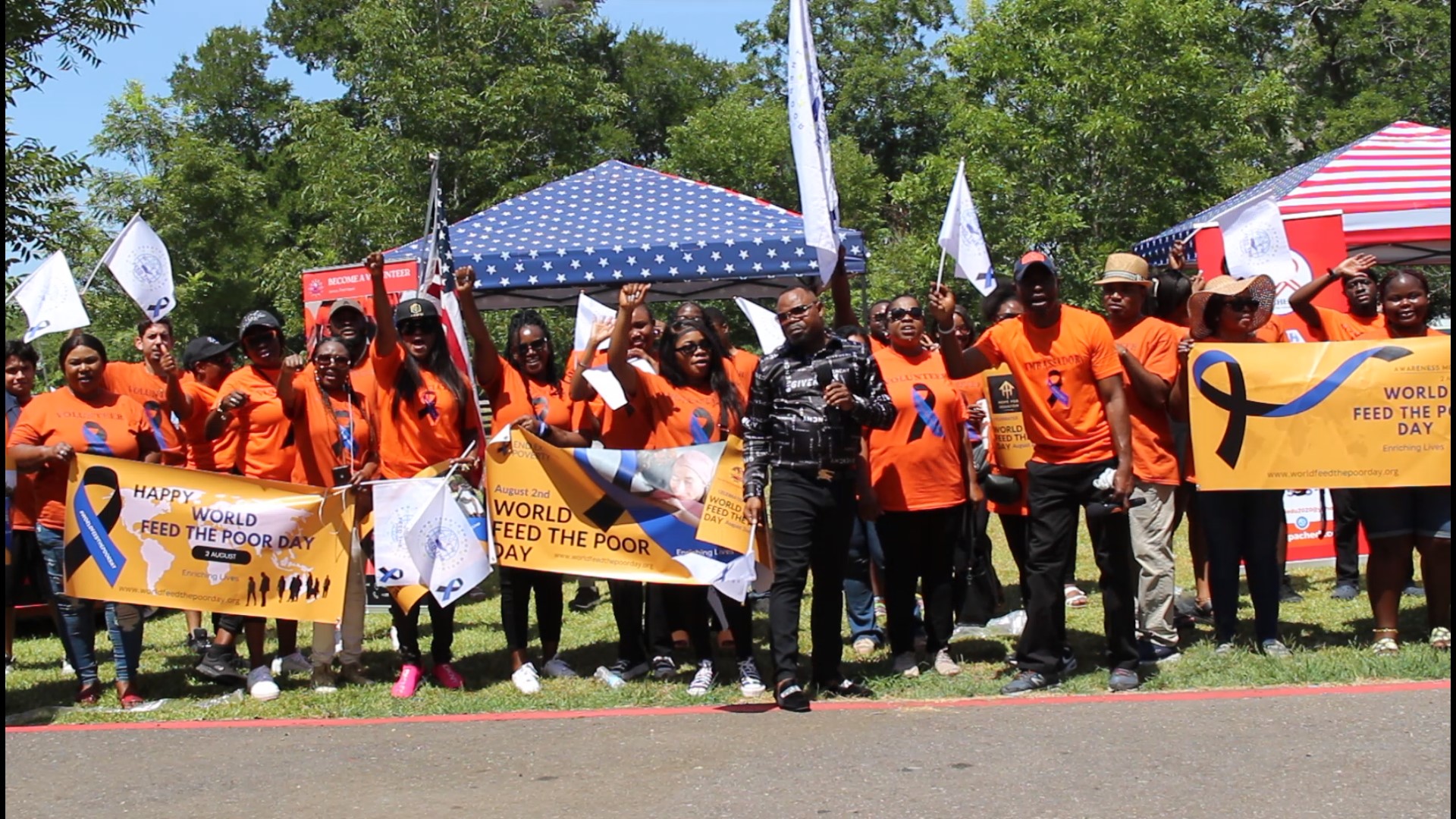
It’s funny the things you remember from childhood. For me, it’s the aroma of freshly baked bread wafting from my grandmother’s kitchen—and the story she’d tell about sneaking extra loaves to neighbors going hungry. I didn’t have a clue then how big the problem really was: over 700 million people worldwide still wrestle with extreme poverty, many of them living on less than two dollars a day. Fast forward to World Feed the Poor Day, and suddenly, her simple act is echoed by thousands, standing together on one extraordinary day to spread hope, dignity, and compassion one small gesture at a time. 1. The Global View: More Than Numbers, Why Poverty Persists When I first started learning about poverty statistics, I’ll admit—I got lost in the numbers. Over 700 million people living in extreme poverty. Most surviving on less than $1.90 a day. That’s not just a statistic; it’s a daily struggle for health, education, clean water, and dignity. It’s easy to let these numbers blur together, to forget that each one represents a real person, a real story. But the truth is, behind every data point is a beating heart, a family, a dream deferred. The numbers are staggering. According to the World Bank, more than 10% of the world’s population faces extreme poverty. The majority of these individuals live in sub-Saharan Africa, where the challenge is not just about money, but about access—access to food, safe water, education, and opportunity. Rural communities suffer the most, with a poverty rate of 17.2%, more than three times higher than in urban centers. These are not just dry facts; they are a call to action. I remember the first time I volunteered at a local food bank. I expected to see lines, boxes, maybe some tired faces. What I didn’t expect was the hope. There were mothers holding children, elderly men with gentle smiles, teenagers helping one another carry bags. I saw the impact of food insecurity up close. I saw how a simple meal could light up someone’s eyes. That day, the statistics became stories. The numbers became names. World Feed the Poor Day is more than just a date on the calendar. It’s a movement—a global moment to shine a light on poverty awareness and to remind us that hope is not a luxury, but a necessity. On August 2nd, people from every corner of the world come together to feed the poor, empower the marginalized, and celebrate the heroes who fight hunger every day. This year’s event promises outreach programs, thanksgiving sessions, and a grand Gala/Awards Night to honor those who inspire change. But why does poverty persist? Why, in a world of abundance, do so many still go hungry? The answers are complex. In Mozambique, poverty means walking miles for water, missing school to help at home, and facing the constant threat of disease. In Houston, it might look like a single mother juggling two jobs, or a child going to bed hungry in a city of plenty. The faces of poverty are different, but the pain is the same. The similarities are unexpected, the differences staggering, but all are deserving of our attention. Research shows that rural poverty is especially severe. Food insecurity is not just about empty stomachs; it’s about lost potential, about children who can’t focus in school, about families forced to make impossible choices. Lack of clean water and sanitation compounds the struggle, making every day a fight for survival. And yet, in the midst of these challenges, there is resilience. There is hope. "Hope is the fuel that drives us and the beacon that inspires us." – Peter Oriyomi This quote rings true every time I witness a volunteer hand out a meal, or a donor quietly slip a check into a collection box. Every act of kindness, no matter how small, is a spark in the darkness. On World Hunger Day and every day, we are reminded that change begins with awareness—and with action. We are reminded that together, we can create a world where no one goes hungry, where no one is left behind. So, as we look at the poverty statistics and try to grasp the scale of the challenge, let’s remember the faces behind the numbers. Let’s remember the mothers, the children, the unlikely heroes who rise every day in the face of adversity. Let’s keep hope alive, keep feeding the poor, and keep shining a light in the darkness. Because every story matters. Every life counts. 2. Ripple Effects of Kindness: Real Stories from World Feed the Poor Day Every year on August 2nd, something extraordinary happens. World Feed the Poor Day isn’t just another date on the calendar—it’s a living, breathing movement. It’s a day when public outreach transforms from an abstract idea into a chorus of real, human stories. I’ve seen firsthand how charity events, from bustling city centers to quiet rural corners, become the stage for acts of hope and generosity that ripple far beyond their origins. Public Outreach: Everyone Finds a Role The heart of World Feed the Poor Day beats strongest in its public outreach. Whether it’s distributing meals in local parks, organizing food drives, or hosting worldwide thanksgivings, there’s a place for everyone. I’ve watched as teachers, business owners, and even entire families roll up their sleeves to serve. It’s not just about the food or the funds—it’s about showing up, together, to say, “You matter.” These moments remind me that public outreach isn’t reserved for the few; it’s an open invitation for all. Unexpected Acts of Generosity Some of the most powerful stories come from the most unlikely heroes. I remember hearing about a young student in Houston who, inspired by World Feed the Poor Day, started collecting spare change at school. She didn’t have much to give, but her determination sparked a chain reaction—classmates, teachers, and even local businesses joined in. That small jar of coins became a symbol of what’s possible when kindness catches fire. It’s proof that donation impact isn’t measured in dollars alone, but in the courage to care. Volunteering: Growing Empathy and Hope Volunteering on World Feed the Poor Day isn’t just about giving; it’s about growing. I’ve seen volunteers discover empathy they never knew they had. Some arrive nervous, unsure if they’ll make a difference. By the end of the day, they’re transformed—eyes opened, hearts expanded. As Danielle Farley, one of this year’s event speakers, so beautifully put it: "Every volunteer matters, and every small act makes a difference." Those words echo through every meal served and every hand held. Research shows that volunteer opportunities like these don’t just alleviate hunger—they build bridges of understanding and hope. Community Without Borders: From Namibia to New York What amazes me most is how World Feed the Poor Day erases boundaries. This isn’t just a Houston event or a U.S. initiative. It’s global. I’ve connected with volunteers in Namibia, New York, and everywhere in between—some joining virtually, others in person. Stories are exchanged, meals are shared, and suddenly, the world feels a little smaller and a lot kinder. The sense of community stretches farther than we ever imagine, reminding us that the fight against poverty is a shared journey. Gratitude Sessions and Gala Nights: Fuel for Change Recognition matters. It’s why the Red Carpet & Gala Night at Houston Funplex on August 10th is more than just a celebration—it’s a catalyst. When donors and volunteers are honored, their commitment deepens. I’ve seen the spark in someone’s eyes when their efforts are acknowledged. Gratitude sessions and award nights don’t just celebrate the past; they ignite bigger dreams for the future. Studies indicate that these moments of recognition generate lasting momentum for anti-poverty efforts, motivating others to step forward and join the cause. Public outreach programs are crucial to World Feed the Poor Day’s success. They turn compassion into action and numbers into names. From local donation drives to international thanksgivings, every act—no matter how small—adds to the collective impact. Personal stories, like that of the Houston student, resonate more deeply than statistics ever could. Honoring volunteers and donors at charity events and the gala night fuels ongoing involvement and inspires new volunteer opportunities. World Feed the Poor Day is a tapestry of kindness—woven from countless individual threads. Each story, each act, each thank you, is a reminder that hope is not just a feeling. It’s something we create, together, one ripple at a time. 3. Beyond August 2nd: How Ordinary People Become Part of the Solution World Feed the Poor Day on August 2nd is a beacon—a day when the world’s attention turns to poverty awareness and the urgent need for poverty solutions. But as the sun sets on the celebration, I’m left with a burning question: what happens next? Does the momentum fade, or can we carry that spark into the rest of the year? The answer, I believe, lies in the hands of ordinary people—people like you and me—who refuse to let hope be a one-day affair. I’ve seen it firsthand: the smallest gestures can ripple outwards, touching lives in ways we may never fully understand. A single donation, a few hours spent volunteering, or even sharing a story of hope can ignite change. The Feed the Poor Foundation and similar organizations aren’t just about one event; they’re about building a movement. Their year-round volunteer opportunities and sustainable projects are proof that the fight against hunger and poverty is ongoing, not seasonal. Research shows that sustained community action multiplies change far beyond a single day. When I look at the impact of Feed the Poor Foundation’s outreach—public events, thanksgiving sessions, and the grand Gala Night honoring unlikely heroes—I see more than just charity. I see a blueprint for transformation. Every act of kindness, every nomination for a World Feed The Poor Honors Award, every business that hosts a fundraising challenge, adds a new thread to this tapestry of hope. Imagine, for a moment, if every small business in your city joined in—a Feed the Poor Day challenge on every corner, every café, every shop. What kind of ripple would that start? It’s a wild thought, but not impossible. Sometimes, the quirkiest ideas—like a bake sale in a school hallway or a local government office matching employee donations—create the most lasting impact. Studies indicate that when businesses, schools, and even local governments champion creative poverty solutions, they inspire entire communities to get involved. And it’s not just about money. Sure, every dollar counts (and, by the way, all donations to Feed the Poor Foundation of America are tax deductible—Tax ID 84-1825947), but the real power comes from people. Volunteers who give their time, advocates who spread the word, and those who simply refuse to let the issue fade into the background. Faith, partnerships, and the unshakeable belief that together, we can end hunger—these are the forces that keep the movement alive long after August 2nd. I’m inspired by the stories I’ve heard—of teachers who organize food drives, artists who donate their work for charity auctions, and local leaders who use their platforms to raise poverty awareness. Each story is a reminder that you don’t need to be a celebrity or a billionaire to make a difference. You just need to care enough to act. As Laasya Goriparti so beautifully put it: "Let us feed the poor, empower the marginalized, and transform lives." The Feed the Poor Foundation’s mission isn’t just about providing meals; it’s about restoring dignity, creating opportunity, and building a world where no one is left behind. Their faith-based approach is open to all, inviting anyone with a compassionate heart to join the cause. Whether you’re a business owner, a student, a parent, or a retiree, there’s a place for you in this movement. So, as we move beyond August 2nd, I challenge you—no, I invite you—to take the next step. Donate if you can. Volunteer your time. Nominate someone for an honor. Or simply share a story of hope. Because the fight against poverty isn’t won in a day. It’s won in the everyday choices we make, the partnerships we forge, and the wild, wonderful belief that together, we can transform hunger into hope. Let’s keep the light burning. Let’s keep feeding the poor. And let’s never stop believing in the power of ordinary people to spark extraordinary change. TL;DR: Whether it's a dollar, an hour, or a heartfelt thank you, every act counts. Join World Feed the Poor Day and help shape a world where nobody is forgotten.
11 Minutes Read
May 28, 2025
Digging Deeper: Why Farm Violence Is Everyone’s Problem (Not Just South Africa’s)
Did you know I once spent a season working alongside smallholder farmers? It changed my view on food forever. I remember the ache in my hands at the end of the day, but what stuck with me most was how fiercely these folks, regardless of background, cared about feeding their communities. So when I hear news of violence against farmers—whether in South Africa, Nigeria, or anywhere—I feel a pit in my stomach. Let's unravel why farm violence is a threat not just to individuals and families, but to all of us. Beyond the Headlines: The True Toll of Farm Violence Let’s be honest—when we hear about farm violence in the news, it’s easy to let the headlines wash over us. Another attack, another statistic. But behind every number is a real person, a family, a community that’s been shaken to its core. I’ve seen this up close. My friend Lindiwe’s grandmother survived a farm attack in Mpumalanga. She lost her sense of safety more than anything else. The fear lingers, long after the headlines fade. We can’t afford to treat farm attacks as distant tragedies. Farmers are the backbone of our food systems. They are the ones who rise before dawn, tending to the land so that we can eat. Lose them, and we all pay the price. It’s not just about the food on our tables—it’s about the stability of entire communities and, honestly, the future of food security for everyone. Farm Violence: More Than Just a South African Problem There’s a misconception that violence against farmers is a uniquely South African issue. But that’s not true. From South Africa to Nigeria, and even beyond Africa’s borders, farmers are under threat. In Nigeria, for example, Fulani herders have been accused of deadly attacks on farming communities. The Feed The Poor Foundation put it plainly: “Killing farmers is killing the poor.” It’s a global crisis, not just a local one. In South Africa, the numbers are sobering. Research shows that between April 2020 and March 2024, there were 225 farm-related murders. That’s 225 lives lost—225 families changed forever. And here’s something that doesn’t get enough attention: these attacks impact both Black and white farmers. In fact, recent police data shows that in the fourth quarter of 2024/2025, five out of six farm murder victims were Black. The myth that only white farmers are targeted is just that—a myth. ‘Every time a farmer is killed, a community’s heart stops beating for a moment.’ – Lindiwe Nkosi Beyond the Numbers: The Human Cost It’s easy to talk about farm attacks in terms of statistics. But what about the stories behind those numbers? When Lindiwe’s grandmother was attacked, it wasn’t just her physical safety that was threatened. It was her sense of belonging, her trust in her neighbors, her peace of mind. That’s the real cost—trauma that ripples through families and communities, leaving scars that last for years. And it doesn’t stop there. When farmers are afraid, when they leave their land or can’t work safely, food production drops. Prices rise. Hunger spreads. The poor suffer most. The Feed The Poor Foundation warns that “targeted killing of farmers will aggravate sufferings of the poor and ultimately lead to hunger and starvation.” It’s a chain reaction, and it starts with violence in the fields. Global Instability, Local Consequences I wish I could say this was just a problem for rural South Africa. But it’s not. The violence spills over borders and oceans, echoing in headlines from Nigeria to Latin America. Every attack on a farmer is an attack on the world’s ability to feed itself. And the consequences are felt everywhere—from empty shelves in city supermarkets to malnourished children in remote villages. Governments have a responsibility to protect all lives, regardless of race or background. The South African government, for example, has pushed back against claims of racial genocide, emphasizing that farm murders affect people of all races and are often driven by material gain rather than hate. Still, the trauma is real, and the need for action is urgent. Farmers feed the world—lose them, and we all pay the price. Attacks aren’t just statistics; each one means a disrupted family, a scarred community, and real fear. Violence isn’t isolated to one nation: from South Africa to Nigeria, farmer killings reflect global instability. Repeated trauma disrupts food systems, making hunger and poverty worse. So, the next time you see a headline about farm violence, remember: it’s not just a story from far away. It’s a warning. If we don’t protect our farmers, we risk losing much more than crops—we risk losing our future. Myth-busting: Race, Crime Stats, and Global Narratives Let’s be honest—when we hear about farm murders and farm attacks in South Africa, the headlines almost always focus on white farmers. That’s what grabs attention, right? But if we dig deeper into the crime statistics, the story is much more complicated—and, frankly, more human. The reality is that violence against farmers isn’t just a “white” problem, or even just a South African problem. It’s a global issue that touches everyone who depends on food (which is, well, all of us). I’ve seen so many viral posts and news stories that paint a picture of targeted racial genocide, especially the so-called “white genocide” narrative. But research shows these claims don’t hold up under scrutiny. South African authorities, for instance, have repeatedly stated that all races are affected by farm violence. In fact, recent data from the South African Police Service shows that between 2020 and 2024, there were 225 murders on farms—a small fraction compared to the country’s overall murder rate. And in the most recent quarter, five out of six farm murder victims were Black, not white. So, why does the world keep hearing only one side? I think part of the problem is that sensational stories travel faster than facts. It’s easier to get people riled up with a dramatic headline than with a nuanced explanation. But as Mpho Molefe said, ‘It’s far too easy for outsiders to use our pain for their own political ends.’ That hits home for me. When outsiders—whether politicians, activists, or even presidents—jump in with half the facts, it can make things worse. Take the Trump claims about violence against white farmers. President Trump’s statements sparked international outrage, but South African authorities quickly disputed his assertions. They stressed that these attacks aren’t part of a targeted racial campaign, but are instead complex crimes often driven by poverty, desperation, and the lure of material gain. Let’s pause and look at the numbers for a second. Between 2012 and 2018, the number of farm attacks actually went up, but the number of farm murders went down. That’s not what you’d expect if there was a coordinated campaign of racial violence. Instead, it suggests that while farmers are definitely under threat, the motives are mixed. Sometimes it’s about land. Sometimes it’s about money or food. Sometimes it’s just raw desperation. And this isn’t just a South African story. In Nigeria, for example, Fulani herders have been accused of killing farmers, leading to similar debates about race, ethnicity, and land. The Feed The Poor Foundation put it bluntly: “Killing farmers is killing the poor. Farmers are central to human existence. Food is essential to life.” When farmers are targeted—anywhere in the world—it’s not just a tragedy for their families. It’s a threat to everyone who relies on them for food. That means all of us. It’s also worth noting that local governments often have a more nuanced view than what you see on social media. South African officials, for example, have repeatedly emphasized that their priority is to protect all lives—regardless of race. They’ve made arrests, launched investigations, and tried to address the root causes of violence. But they also point out that these crimes are sometimes opportunistic, not always driven by hate or politics. So, when we talk about racial tensions and farm attacks, we need to remember that context matters. Yes, there are real problems. Yes, there is real pain. But the story isn’t as simple as it’s often made out to be. The government response, while not perfect, is more focused on protecting lives and property than on fueling divisions. And the statistics show that farm violence is a complex issue, not a one-dimensional crisis. At the end of the day, I believe that all lives should be protected. Farmers, no matter where they live or what they look like, are vital to our survival. When we let sensational narratives take over, we risk missing the bigger picture—and the chance to find real solutions. What Now? Responsibility, Justice, and the Path Forward Let’s be honest: when we talk about violence against farmers, it’s easy to think of it as a distant tragedy—something happening “over there,” maybe in South Africa, maybe in Nigeria, maybe somewhere else. But the truth is, every attack on a farmer is an attack on the very foundation of food security and, by extension, on all of us. I keep coming back to something I heard recently: “We need to care about who grows our food as much as we care about the food itself.” Sipho Dlamini’s words stick with me because they cut through the noise and get to the heart of the matter. If we want to talk about human rights, we have to start with the people who make life possible—our farmers. The government response to farm violence is, of course, crucial. We’ve seen some progress: recent investigations into farm murders in South Africa have led to several arrests, and authorities are under pressure to do more. But let’s not kid ourselves—arrests alone won’t solve the problem. Research shows that while there’s been a rise in farm attacks in recent years, the number of murders has actually decreased. Still, prevention is lagging behind. It’s not enough to send more police to patrol the fields. Real progress means tackling the roots of the problem: poverty, inequality, and the lack of opportunity that drive people to desperation. And desperation is exactly what’s behind many so-called “land invasions.” Studies indicate that these acts are less about malice and more about survival. When people are hungry, when they have no land and no hope, they sometimes make choices that hurt others. It’s a cycle—one that connects land rights, hunger, and violence in a way that’s hard to untangle. But if we’re serious about farm safety and protecting rural communities, we have to look at the bigger picture. This isn’t just a South African problem, or a Nigerian problem, or a problem for any one country. It’s a global issue, and it demands a global response. That’s why organizations like Feed The Poor Foundation are calling for solidarity across borders. They’re right: killing farmers is killing the poor. It’s killing the future. Every time a farmer is attacked, the ripple effects are felt far beyond the farm gates. Food becomes scarcer. Prices go up. The most vulnerable—children, the elderly, the poor—suffer first and worst. Protecting farmers is a human rights issue, plain and simple. And it’s one that doesn’t end at national borders. But what about us—those of us who aren’t in government, who don’t run international organizations? Do we have a role to play? I think we do. Imagine if we all started treating farmers like the essential workers they are. What if, every time we bought a bag of rice or a loaf of bread, we thought about the hands that grew it? What if supermarkets tagged produce with the farmer’s story—would we care more about their safety? Maybe we’d make different choices. Maybe we’d speak up more, demand better policies, support organizations that protect rural communities. Of course, it’s easy to feel powerless in the face of such big problems. But change starts with awareness, and with the choices we make every day. The government must step up—investigating crimes, preventing violence, and addressing the root causes of land conflict. But we can step up too, by refusing to turn away, by advocating for justice, and by remembering that food security is everyone’s business. In the end, it’s simple: all lives should be protected. Farmers help ensure life is sustained. Let’s call out violence wherever it happens, and let’s push for a world where no one has to risk their life to feed another. Because when we protect farmers, we protect ourselves. TL;DR: Farm violence is a multifaceted problem that jeopardizes food security and human rights around the world, with far-reaching consequences beyond the farms themselves. Protecting farmers is a shared responsibility, and understanding the complex realities behind headline-grabbing events can help us all promote peace and stability.
11 Minutes Read

May 28, 2025
Unexpected Champions: How Ibrahim Traoré's Bold Moves are Reshaping Burkina Faso
I never thought I’d find myself celebrating government officials, but then I learned about Ibrahim Traoré. There’s always at least one leader somewhere doing something so bold that even cynics like me have to take notice. To be honest, when my friend at Feed The Poor Foundation called me up, gushing about the new direction in Burkina Faso, I rolled my eyes. Another politician promising change? But it turns out, Traoré, who’s not just talking the talk but making sweeping changes, really is worth a closer look.From Humble Rank to National Stage: The Story of the Youngest PresidentWhen I first heard about Ibrahim Traoré, I’ll admit, I was skeptical. Another military leader taking power in Africa? I thought I’d seen this story before. But as I dug deeper, I realized Traoré’s journey is anything but ordinary. In fact, his rise from a modest military rank to becoming the youngest president in the world at just 36 is a story that truly inspires.Traoré’s path to the presidency of Burkina Faso wasn’t paved with privilege or the trappings of power. He was an officer, not a general, when he stepped onto the national stage in 2022. In a country where age and titles often dominate, he broke the mold. He didn’t just take office—he took a stand. Research shows that Traoré refused the official benefits that usually come with the presidency. He declined the presidential salary, choosing instead to keep his modest military rank. That’s not just a gesture; it’s a statement. It’s anti-corruption in action, not just words.Ibrahim Traoré’s leadership achievements go beyond symbolic acts. He’s become a charismatic leader who resonates with the people, especially the poor and marginalized. In a region where leaders often cling to status and perks, Traoré’s humility stands out. He’s not interested in titles—he’s interested in impact. As he himself put it:“It’s not the title that matters, but the impact we make.” – Ibrahim TraoréThat quote struck me. It made me reflect on my own assumptions about leadership. I used to believe that military rulers were all the same—hungry for power, distant from the people. But Traoré’s choices have challenged that view. He’s shown that leadership can be about service, not self-enrichment. His anti-corruption stance isn’t just a campaign slogan; it’s woven into his daily actions.Since taking office, Traoré has focused on the needs of Burkina Faso’s most vulnerable. He’s made it clear that improving the lives of the poor is at the heart of his mission. Organizations like Feed The Poor Foundation are celebrating his efforts, and for good reason. Under his watch, the government is prioritizing social action, healthcare, and infrastructure—areas that directly touch the lives of ordinary citizens.What makes Traoré’s story so remarkable is the way he’s rewriting the script for African leadership. He’s young, he’s bold, and he’s unafraid to break with tradition. By refusing the perks of office and keeping his military rank, he’s sending a powerful message: leadership is about responsibility, not reward. In a world hungry for genuine change, Ibrahim Traoré stands as a beacon of hope—a reminder that sometimes, the most unexpected champions come from the humblest beginnings.The Poverty Fight: Concrete Steps, Not Just SlogansWhen I look at Burkina Faso today, I see a country in the midst of transformation. It’s not just talk. It’s not just another set of empty promises. Under President Ibrahim Traoré, social development initiatives are taking root, and the impact is already visible. I’ve witnessed firsthand how these social programs, supported by organizations like the Feed The Poor Foundation, are improving lives and supporting the poor in ways that feel both bold and refreshingly practical.In the first year of Traoré’s leadership, the government launched a wave of new social development initiatives. These aren’t just slogans painted on billboards—they’re real, on-the-ground actions. The Feed The Poor Foundation, a group I deeply respect, has stepped up to applaud these efforts. Their volunteers tell stories of hope returning to villages that once felt forgotten. One local volunteer put it best:‘When you see a leader truly listening to the poor, you can feel optimism again.’That optimism is more than a feeling. It’s showing up in the expansion of healthcare and education infrastructure. Clinics that were once empty now have medicine and staff. Schools that struggled to keep their doors open are seeing new supplies and eager students. It’s not perfect—Burkina Faso still faces a security crisis, and poverty remains a daily struggle for many. But these social programs are a start, and they are making a difference.Research shows that collaboration with organizations like the Feed The Poor Foundation has accelerated the impact of these social development initiatives. NGOs on the ground are reporting real improvements in social welfare. I remember a Feed The Poor Foundation worker describing the “noticeable difference” in local villages just one year after Traoré’s policies kicked in. People are healthier. Children are learning. There’s a sense that, finally, the needs of the poorest are being recognized and addressed.What makes this moment even more inspiring is the way the government is allocating resources. Instead of letting the country’s mineral wealth slip away, Traoré’s administration is channeling it into community development. Healthcare, education, and basic needs are at the core of this new focus. The Feed The Poor Foundation has been quick to endorse these changes, celebrating the progress made under new leadership.I’m reminded every day that poverty alleviation isn’t about grand speeches. It’s about concrete steps—building clinics, supporting schools, and making sure no one is left behind. The social programs unfolding in Burkina Faso are proof that when leaders and communities work together, real change is possible. And as someone who believes deeply in supporting the poor, I find hope in every story of a child returning to school or a family receiving the care they need.This is what it means to move beyond slogans. This is what it looks like when a nation decides to invest in its people, with the support of champions like the Feed The Poor Foundation. The journey is far from over, but the path is finally being cleared.Redefining Global Alliances: Sahel States and the Path to Self-SufficiencyWhen I look at the recent journey of Burkina Faso, I see a nation daring to dream beyond its old boundaries. Under the bold leadership of Ibrahim Traoré, Burkina Faso is not just changing its policies—it’s rewriting its destiny. The country’s decision to join the Sahel States Alliance with Mali and Niger is more than a political move; it’s a statement of hope and self-belief. Together, these nations are building an anti-imperialist regional bloc, choosing unity and cooperation over dependency on outside powers.I find it inspiring to witness how Traoré’s vision is taking shape. In the past year, Burkina Faso has made headlines for expelling French troops, a move that many thought impossible. It’s like watching someone unplug from an outdated power grid and, against all odds, wire up their neighborhood with renewable energy. Risky? Absolutely. But boldness is sometimes the only way to break free from old chains.Traoré’s leadership is rooted in a deep commitment to economic self-sufficiency. He’s not just talking about change—he’s living it. By prioritizing local control of resources and redirecting national wealth for the benefit of ordinary people, he’s sending a powerful message: Burkina Faso’s future will be shaped by its own hands. Research shows that this shift toward self-determined development is drawing inspiration and support from regional partnerships. The Alliance of Sahel States (AES), launched post-2022, is proof that a shared vision can unite nations facing similar challenges.The withdrawal from ECOWAS, another bold step, signals a clear break from the past. It’s not just about leaving an organization; it’s about choosing a new path—one that values sovereignty and regional unity above all else. As Traoré himself said,‘We must chart a new path, free from old chains, for Burkina Faso to thrive.’ – Ibrahim TraoréThis isn’t just rhetoric. Traoré’s actions—like declining his presidential salary and keeping his modest military rank—show a genuine commitment to fighting corruption and serving the people. He’s channeling the country’s rich mineral resources into projects that support healthcare, education, and infrastructure. These are the building blocks of a stronger, more independent Burkina Faso.I am moved by the courage it takes to make such sweeping changes. Traoré’s Burkina Faso is prioritizing the needs of the poor, standing up for sovereignty, and seeking partnerships that respect the dignity of its people. The Sahel States Alliance is more than a political alliance; it’s a beacon for those who believe that Africa can—and should—chart its own course.In a world that often rewards conformity, Burkina Faso’s leadership is a reminder that real progress sometimes means taking the wild card. It means risking the unknown for the promise of something better. And as I watch this story unfold, I can’t help but celebrate the spirit of a nation determined to thrive on its own terms.Celebrating Leaders Who Actually Lead: Why Traoré's Example MattersEvery so often, a leader emerges who doesn’t just talk about change but actually delivers it. In Burkina Faso, Ibrahim Traoré is proving to be one of those rare, inspiring leaders. For so long, many of us have grown cynical about politics—especially in regions where promises are often broken and hope feels like a luxury. But Traoré’s leadership achievements are challenging that narrative, and I find myself, almost against my own skepticism, wanting to celebrate leaders like him.Why does it matter so much to acknowledge someone like Traoré? Because when you’ve lost faith in politics, seeing a president who genuinely cares about improving the lives of his people is nothing short of revolutionary. Traoré’s actions—like declining his presidential salary, keeping his modest military rank, and focusing on the needs of the poor—break away from the cynical expectations that have haunted African leadership for decades. He’s not just making speeches; he’s rolling up his sleeves and getting to work. As one social development advocate put it,‘Not every day do you see a president roll up his sleeves for actual change.’Feed The Poor Foundation and countless NGOs on the ground have noticed this shift. There’s a new energy in Burkina Faso, a sense that things might actually get better. Traoré’s focus on security, healthcare, and infrastructure is more than just policy—it’s a lifeline for communities that have endured hardship for far too long. Research shows that positive leadership can catalyze not only national but also regional change, and we’re beginning to see those ripples spread across West Africa.Imagine, just for a moment, if more leaders across Africa followed Traoré’s example. What would social change look like if inspiring leaders everywhere put their people first, rejected corruption, and worked for economic self-sufficiency? The possibilities are breathtaking. We could see a wave of hope and progress sweeping across the continent—one that lifts up the poor, empowers the marginalized, and transforms entire societies.I’ll admit, I’m usually one of the diehard skeptics. I’ve seen too many empty promises and watched too many leaders put themselves before their people. But sometimes, hope sneaks in when you least expect it. Traoré’s leadership in Burkina Faso is a reminder that change is possible, even in places where it once seemed impossible. He’s inspired not just locals, but also outsiders who had given up on politics altogether.So today, let’s celebrate leaders who actually lead—those who care enough to improve the lives of their people. Let’s recognize the leadership achievements that matter, and let’s hold onto the hope that Traoré’s example will inspire others to follow. Burkina Faso leadership is showing us what’s possible when courage, humility, and vision come together. And maybe, just maybe, this is the beginning of something bigger than any one country.TL;DR: Burkina Faso, under the daring and youthful Ibrahim Traoré, is rewriting the story of leadership for the poor—one bold action at a time.
10 Minutes Read

May 27, 2025
My Shrinking Umbrella: Surprising Lessons on Mental Health & Emotional Well-being in 2025
Nobody tells you that mental health isn’t always a mountain to climb—it’s sometimes a soggy umbrella you keep losing and finding again. Last year I found myself on the verge of tears watching a cooking show, which made me question everything. Was I emotionally unhinged or simply human? In 2025, we live in an age where emotional well-being isn’t just for yoga influencers with color-coded planners. It’s raw, confusing, backed by unexpected science, and—if you’re me—sometimes involves spontaneous cry-laughing over burnt toast. This is my invitation into a messier, more honest journey. The Data Nobody Warned Me About: Surprising Trends in Mental Health I used to think mental health statistics were just numbers—cold, distant, not really about me. But 2025 has a way of pulling back the curtain. Suddenly, the data feels personal. It’s not just a trend in some report; it’s the reality I see in my friends, my family, and, honestly, in myself. The latest Mental Health Trends are more than headlines—they’re a mirror reflecting what so many of us are living through. Let’s start with the numbers nobody warned me about. According to the CDC, depression prevalence is highest among adolescents, at a staggering 19.2%. That’s not just a statistic—it’s nearly one in five teens. I think about my younger cousins, my neighbors’ kids, and I realize: this is happening all around us. And it doesn’t just fade away as we get older. If you’re Gen Z like me, you probably already know this story by heart. Research shows that 63% of Gen Z reported “less than good” mental health this year (Verywell Mind, 2025). That’s almost two-thirds of us. It’s heavy, but it’s real. It’s tempting to believe that things get easier with age, but the Mental Health Statistics tell a different story. Millennials aren’t far behind—52% reported struggling with their mental health. Gen X? 49%. Even Boomers, who grew up in a different world, aren’t immune. Twenty-eight percent of them say their mental health isn’t what it should be. These numbers aren’t just data points. They’re stories, lived experiences, and sometimes, silent battles. What’s changed, though, is how we respond. There’s a new awareness—a collective realization that mental well-being isn’t optional. It’s foundational. In fact, 94% of people now say that mental health is crucial to overall wellness (NielsenIQ, 2025). That’s nearly everyone. I see it in my own life: the way my friends talk about therapy as casually as they talk about gym memberships, or how my parents finally started asking real questions about stress and burnout. The stigma is fading, replaced by a kind of radical honesty. This shift isn’t just cultural—it’s changing the way we live and shop. Self-care has become a lifestyle, not just a buzzword. I used to roll my eyes at “self-care Sunday” posts, but now I get it. The market gets it, too. Demand for Mental Health Products—apps, supplements, journaling kits—has surged by 33% in the past year alone. That’s not hype; it’s a movement. People are searching for tools that help, and brands are listening. I’ve noticed friends swapping recommendations for meditation apps the way we used to share playlists. There’s a sense of hope in that—like maybe we’re building something better, together. But it’s not just about buying products. It’s about making choices—sometimes small, sometimes life-changing—that put mental health first. I see it in the way people choose jobs, relationships, even what they eat. “Mental health is no longer something we can ignore in our consumer choices,” says Dr. Kayla Rutherford. That quote sticks with me. It’s a reminder that every decision, from the supplements I buy to the boundaries I set at work, is a chance to prioritize well-being. What’s truly surprising is how these Mental Health Trends have become a foundation for how we live in 2025. We’re not just surviving; we’re learning to thrive, even when the numbers look daunting. There’s a new kind of resilience in the air—a willingness to talk, to seek help, to try new things. And maybe, just maybe, that’s the most important trend of all. Depression prevalence: Adolescents 19.2% (CDC, 2023) Gen Z Mental Health: 63% report less than good mental health (Verywell Mind, 2025) Millennials: 52%; Gen X: 49%; Boomers: 28% 94%: Say mental well-being is more important than ever (NielsenIQ, 2025) Mental Health Product Demand: Up 33% since 2022 “Mental health is no longer something we can ignore in our consumer choices.” — Dr. Kayla Rutherford Confessions from My Couch: When Emotional Well-being Gets Weird Let’s get honest—my journey with emotional well-being hasn’t been a perfectly curated Instagram feed. It’s more like a highlight reel of awkward moments, messy breakthroughs, and, yes, that one time I left a holistic wellness retreat early after crying into a gluten-free croissant. I wish I could say emotional well-being is all spa days and herbal tea, but the truth? Sometimes it’s facing your weirdest feelings head-on, even when you’d rather hide under the covers. These days, holistic health practices are everywhere. Breathwork, digital detoxes, nap pods at work—my social circles are buzzing with the latest trends. It’s like everyone’s searching for that magic formula to feel better, to be better. Some of my friends swear by emotional well-being apps, tracking every mood swing and micro-meditation. Me? I swear at mine when it crashes at the worst possible moment. (If you’ve ever lost your guided meditation right as you’re about to reach inner peace, you know the struggle.) But here’s the thing: emotional well-being is deeply personal. What works for one person might be a total flop for someone else. I’ve learned that the path to feeling okay—maybe even thriving—isn’t always neat or predictable. Sometimes, it’s a little weird. Sometimes, it’s a lot weird. Holistic Health Practices: From Mainstream to My Living Room Research shows that holistic wellness has gone mainstream and is more personalized than ever. I see it in my own life and in the lives of people around me. We’re embracing everything from sleep-focused routines to breathwork and digital detoxes. It’s not just about physical health anymore; it’s about integrating emotional well-being into every part of our lives. My best friend swears by her morning gratitude journal and evening yoga flow. My coworker can’t stop talking about the nap pods at our office. Even my mom is experimenting with mindfulness apps (and sending me screenshots of her “calm streaks”). It’s inspiring to see so many people taking their mental health seriously. In fact, studies indicate that 94% of people believe mental health is crucial for overall wellness. That’s huge. And it’s not just talk—65% of us are actively seeking products and routines to support our emotional wellness, a number that’s jumped by 33% since 2022. Emotional Well-being Apps: Proof Over Promises With the explosion of emotional well-being apps and services, I’ve become more skeptical. Maybe you have too. The glossy brochures and influencer endorsements don’t cut it anymore. If a meditation app claims to help with anxiety, I want to see the evidence. I want transparency, not just pretty marketing. “Consumers are looking for more than good marketing—they want real results.” — Dr. Simone Brooks That quote sticks with me. I’ve tried apps that promised to transform my mood in seven days. Some helped, some didn’t. Now, I look for evidence-based claims—real studies, real outcomes. If I’m going to invest my time (and sometimes money), I want to know it’s worth it. It’s a shift I see everywhere. People are demanding more from brands and services. We want to know what works, what doesn’t, and why. Emotional well-being isn’t a trend; it’s a necessity. And we’re getting smarter about how we approach it. When Emotional Well-being Gets Weird (and Wonderful) Let’s be honest: sometimes, the pursuit of emotional wellness gets a little strange. I’ve journaled at 3AM, only to be interrupted by my grumpy cat, who, I’m convinced, has opinions about my existential ramblings. (If only there were an emotion translator for pets—what would she say about my midnight musings?) But that’s the beauty of it. Emotional well-being isn’t about perfection. It’s about showing up for yourself, even when it’s messy, awkward, or downright weird. It’s about trying new things, laughing at yourself, and learning what truly helps you feel grounded. So here’s my favorite emotional wellness tip: embrace the weirdness. Try the holistic health practices that speak to you, but don’t be afraid to walk away from what doesn’t. Demand evidence-based claims from the apps and products you use. And above all, remember—your emotional well-being is yours. It’s personal, unpredictable, and, sometimes, wonderfully weird. Support or Silence? The New Shape of Mental Health in Community & Work I still remember the first time my manager asked, right in front of the whole team, “How are you really holding up?” It was a simple question, but it echoed in the room. For a moment, there was a pause—a collective breath held, as if we were all waiting to see who would blink first. And then, someone spoke up. Vulnerability, it turns out, is contagious. That day, I realized how much we all crave genuine Mental Health Support—not just in private, but out loud, together. Research shows that 65% of people now want coworkers to support mental health openly. That’s a huge shift from just a few years ago. In fact, the demand for Mental Health Resources and Mental Health Services has jumped by 33% since 2022. We’re not just talking about it more; we’re actively seeking help, products, and spaces that nurture our emotional well-being. The numbers tell a story, but the real proof is in the way our workplaces and communities are changing. Take a walk through any modern office, and you’ll probably spot a nap room, a quiet zone, or a sign for “mental health PTO.” On paper, it sounds like a dream. But the reality? Sometimes, it’s a little awkward. I once tried meditating at lunch and woke up with drool on the bean bag. (Guilty as charged.) Still, these spaces matter. They’re signals that we’re allowed to take a break, to breathe, to be human. They’re small steps toward a truly Mental Health Supportive Workplace. But here’s where things get tricky. Mental Health Awareness is everywhere now—on social media, in brand campaigns, at school assemblies, and in community events. We wear the ribbons, post the hashtags, and share the infographics. Yet, even as visibility grows, stigma still lurks in the shadows. Sometimes I wonder: Is it better to post about #MentalHealthAwareness, or to just talk to a friend over pancakes? Maybe both. Maybe the real change happens in those quiet, honest moments when we let our guard down and admit, “Hey, today feels a little heavy.” I think about how far we’ve come. Not long ago, mental health was something whispered about in hallways or hidden behind closed doors. Now, it’s a mainstream concern. Brands, schools, and local communities are running campaigns to normalize Mental Health Support, and the conversation is finally opening up. According to recent studies, 94% of people believe mental health is crucial for overall wellness. That’s almost everyone. And yet, the journey isn’t over. Stigma doesn’t disappear overnight. Sometimes, it just changes shape—becoming more subtle, more internal. If I’m honest, some days I wish workplaces handed out emotional weather reports. Would my forecast be “mostly cloudy with surprise sunshine” or “torrential snacking”? We all have those days. But what’s different now is that we’re starting to talk about them. We’re learning that real dialogue—messy, imperfect, sometimes uncomfortable—is what actually heals. Performative action looks good on paper, but it’s the open support systems, the honest conversations, that foster true emotional well-being. The truth is, we’re only as strong as the support systems around us. As workplace wellness advocate Yolanda Chang puts it: “We’re only as strong as the support systems around us.” That line sticks with me. It’s a reminder that we don’t have to do this alone. Whether it’s a manager checking in, a friend sharing pancakes, or a community running a campaign, every act of support matters. Every conversation chips away at stigma and builds something stronger in its place. So, as we look to the future, let’s keep choosing support over silence. Let’s keep building workplaces and communities where Mental Health Support isn’t just a policy or a hashtag, but a lived reality. Because when we show up for each other—messy, real, and unfiltered—that’s when true healing begins. And maybe, just maybe, our emotional weather will start to clear. TL;DR: Mental health is more than a trend—it's a complex, personal experience shaped by culture, community, and a healthy dose of unpredictability. In 2025, embracing the mess just might be our greatest asset.
11 Minutes Read