.png&w=1280&q=75)
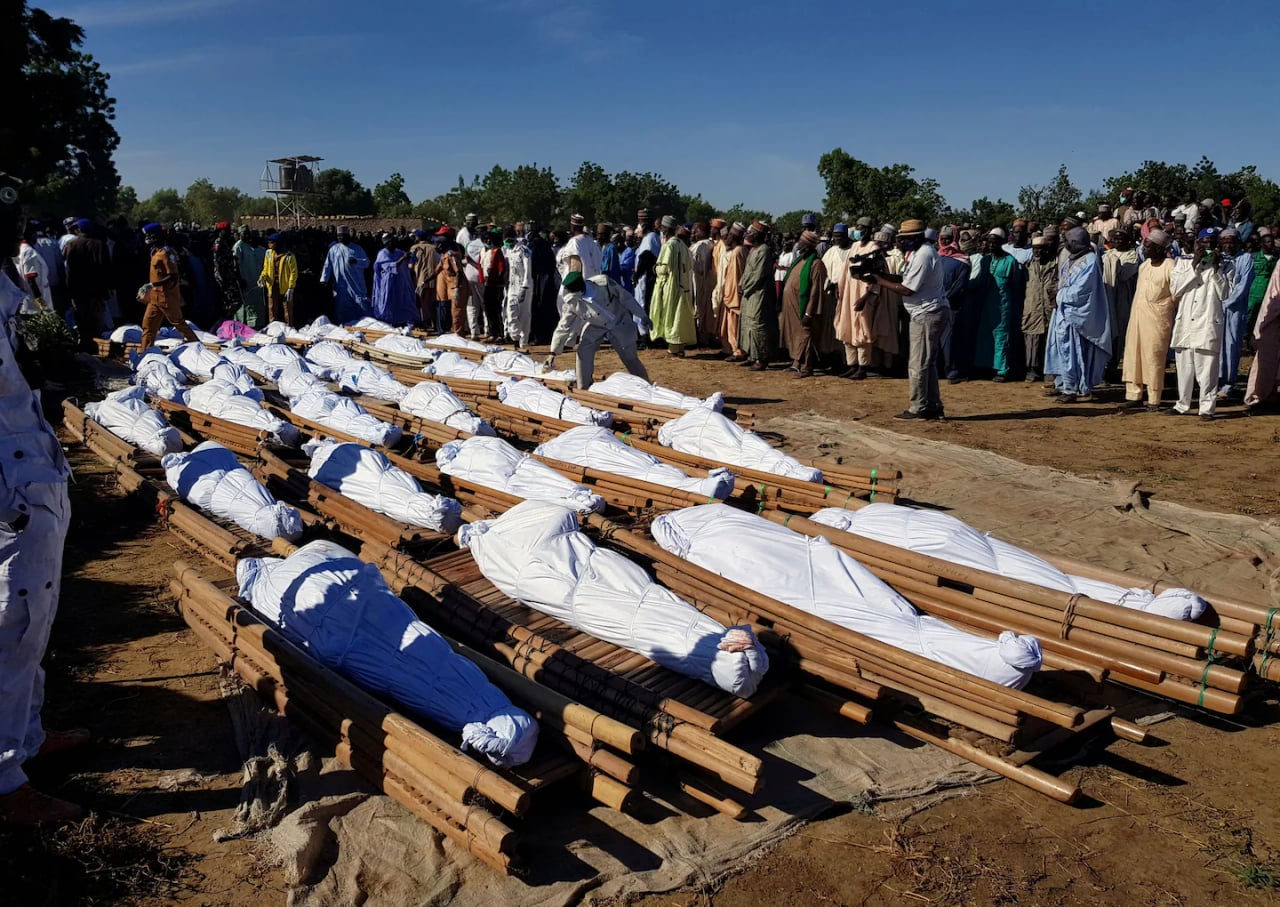



Did you know I once spent a season working alongside smallholder farmers? It changed my view on food forever. I remember the ache in my hands at the end of the day, but what stuck with me most was how fiercely these folks, regardless of background, cared about feeding their communities. So when I hear news of violence against farmers—whether in South Africa, Nigeria, or anywhere—I feel a pit in my stomach. Let's unravel why farm violence is a threat not just to individuals and families, but to all of us.
Beyond the Headlines: The True Toll of Farm Violence
Let’s be honest—when we hear about farm violence in the news, it’s easy to let the headlines wash over us. Another attack, another statistic. But behind every number is a real person, a family, a community that’s been shaken to its core. I’ve seen this up close. My friend Lindiwe’s grandmother survived a farm attack in Mpumalanga. She lost her sense of safety more than anything else. The fear lingers, long after the headlines fade.
We can’t afford to treat farm attacks as distant tragedies. Farmers are the backbone of our food systems. They are the ones who rise before dawn, tending to the land so that we can eat. Lose them, and we all pay the price. It’s not just about the food on our tables—it’s about the stability of entire communities and, honestly, the future of food security for everyone.
Farm Violence: More Than Just a South African Problem
There’s a misconception that violence against farmers is a uniquely South African issue. But that’s not true. From South Africa to Nigeria, and even beyond Africa’s borders, farmers are under threat. In Nigeria, for example, Fulani herders have been accused of deadly attacks on farming communities. The Feed The Poor Foundation put it plainly: “Killing farmers is killing the poor.” It’s a global crisis, not just a local one.
In South Africa, the numbers are sobering. Research shows that between April 2020 and March 2024, there were 225 farm-related murders. That’s 225 lives lost—225 families changed forever. And here’s something that doesn’t get enough attention: these attacks impact both Black and white farmers. In fact, recent police data shows that in the fourth quarter of 2024/2025, five out of six farm murder victims were Black. The myth that only white farmers are targeted is just that—a myth.
‘Every time a farmer is killed, a community’s heart stops beating for a moment.’ – Lindiwe Nkosi
Beyond the Numbers: The Human Cost
It’s easy to talk about farm attacks in terms of statistics. But what about the stories behind those numbers? When Lindiwe’s grandmother was attacked, it wasn’t just her physical safety that was threatened. It was her sense of belonging, her trust in her neighbors, her peace of mind. That’s the real cost—trauma that ripples through families and communities, leaving scars that last for years.
And it doesn’t stop there. When farmers are afraid, when they leave their land or can’t work safely, food production drops. Prices rise. Hunger spreads. The poor suffer most. The Feed The Poor Foundation warns that “targeted killing of farmers will aggravate sufferings of the poor and ultimately lead to hunger and starvation.” It’s a chain reaction, and it starts with violence in the fields.
Global Instability, Local Consequences
I wish I could say this was just a problem for rural South Africa. But it’s not. The violence spills over borders and oceans, echoing in headlines from Nigeria to Latin America. Every attack on a farmer is an attack on the world’s ability to feed itself. And the consequences are felt everywhere—from empty shelves in city supermarkets to malnourished children in remote villages.
Governments have a responsibility to protect all lives, regardless of race or background. The South African government, for example, has pushed back against claims of racial genocide, emphasizing that farm murders affect people of all races and are often driven by material gain rather than hate. Still, the trauma is real, and the need for action is urgent.
- Farmers feed the world—lose them, and we all pay the price.
- Attacks aren’t just statistics; each one means a disrupted family, a scarred community, and real fear.
- Violence isn’t isolated to one nation: from South Africa to Nigeria, farmer killings reflect global instability.
- Repeated trauma disrupts food systems, making hunger and poverty worse.
So, the next time you see a headline about farm violence, remember: it’s not just a story from far away. It’s a warning. If we don’t protect our farmers, we risk losing much more than crops—we risk losing our future.
Myth-busting: Race, Crime Stats, and Global Narratives
Let’s be honest—when we hear about farm murders and farm attacks in South Africa, the headlines almost always focus on white farmers. That’s what grabs attention, right? But if we dig deeper into the crime statistics, the story is much more complicated—and, frankly, more human. The reality is that violence against farmers isn’t just a “white” problem, or even just a South African problem. It’s a global issue that touches everyone who depends on food (which is, well, all of us).
I’ve seen so many viral posts and news stories that paint a picture of targeted racial genocide, especially the so-called “white genocide” narrative. But research shows these claims don’t hold up under scrutiny. South African authorities, for instance, have repeatedly stated that all races are affected by farm violence. In fact, recent data from the South African Police Service shows that between 2020 and 2024, there were 225 murders on farms—a small fraction compared to the country’s overall murder rate. And in the most recent quarter, five out of six farm murder victims were Black, not white. So, why does the world keep hearing only one side?
I think part of the problem is that sensational stories travel faster than facts. It’s easier to get people riled up with a dramatic headline than with a nuanced explanation. But as Mpho Molefe said,
‘It’s far too easy for outsiders to use our pain for their own political ends.’
That hits home for me. When outsiders—whether politicians, activists, or even presidents—jump in with half the facts, it can make things worse. Take the Trump claims about violence against white farmers. President Trump’s statements sparked international outrage, but South African authorities quickly disputed his assertions. They stressed that these attacks aren’t part of a targeted racial campaign, but are instead complex crimes often driven by poverty, desperation, and the lure of material gain.
Let’s pause and look at the numbers for a second. Between 2012 and 2018, the number of farm attacks actually went up, but the number of farm murders went down. That’s not what you’d expect if there was a coordinated campaign of racial violence. Instead, it suggests that while farmers are definitely under threat, the motives are mixed. Sometimes it’s about land. Sometimes it’s about money or food. Sometimes it’s just raw desperation.
And this isn’t just a South African story. In Nigeria, for example, Fulani herders have been accused of killing farmers, leading to similar debates about race, ethnicity, and land. The Feed The Poor Foundation put it bluntly: “Killing farmers is killing the poor. Farmers are central to human existence. Food is essential to life.” When farmers are targeted—anywhere in the world—it’s not just a tragedy for their families. It’s a threat to everyone who relies on them for food. That means all of us.
It’s also worth noting that local governments often have a more nuanced view than what you see on social media. South African officials, for example, have repeatedly emphasized that their priority is to protect all lives—regardless of race. They’ve made arrests, launched investigations, and tried to address the root causes of violence. But they also point out that these crimes are sometimes opportunistic, not always driven by hate or politics.
So, when we talk about racial tensions and farm attacks, we need to remember that context matters. Yes, there are real problems. Yes, there is real pain. But the story isn’t as simple as it’s often made out to be. The government response, while not perfect, is more focused on protecting lives and property than on fueling divisions. And the statistics show that farm violence is a complex issue, not a one-dimensional crisis.
At the end of the day, I believe that all lives should be protected. Farmers, no matter where they live or what they look like, are vital to our survival. When we let sensational narratives take over, we risk missing the bigger picture—and the chance to find real solutions.
What Now? Responsibility, Justice, and the Path Forward
Let’s be honest: when we talk about violence against farmers, it’s easy to think of it as a distant tragedy—something happening “over there,” maybe in South Africa, maybe in Nigeria, maybe somewhere else. But the truth is, every attack on a farmer is an attack on the very foundation of food security and, by extension, on all of us. I keep coming back to something I heard recently: “We need to care about who grows our food as much as we care about the food itself.” Sipho Dlamini’s words stick with me because they cut through the noise and get to the heart of the matter. If we want to talk about human rights, we have to start with the people who make life possible—our farmers.
The government response to farm violence is, of course, crucial. We’ve seen some progress: recent investigations into farm murders in South Africa have led to several arrests, and authorities are under pressure to do more. But let’s not kid ourselves—arrests alone won’t solve the problem. Research shows that while there’s been a rise in farm attacks in recent years, the number of murders has actually decreased. Still, prevention is lagging behind. It’s not enough to send more police to patrol the fields. Real progress means tackling the roots of the problem: poverty, inequality, and the lack of opportunity that drive people to desperation.
And desperation is exactly what’s behind many so-called “land invasions.” Studies indicate that these acts are less about malice and more about survival. When people are hungry, when they have no land and no hope, they sometimes make choices that hurt others. It’s a cycle—one that connects land rights, hunger, and violence in a way that’s hard to untangle. But if we’re serious about farm safety and protecting rural communities, we have to look at the bigger picture. This isn’t just a South African problem, or a Nigerian problem, or a problem for any one country. It’s a global issue, and it demands a global response.
That’s why organizations like Feed The Poor Foundation are calling for solidarity across borders. They’re right: killing farmers is killing the poor. It’s killing the future. Every time a farmer is attacked, the ripple effects are felt far beyond the farm gates. Food becomes scarcer. Prices go up. The most vulnerable—children, the elderly, the poor—suffer first and worst. Protecting farmers is a human rights issue, plain and simple. And it’s one that doesn’t end at national borders.
But what about us—those of us who aren’t in government, who don’t run international organizations? Do we have a role to play? I think we do. Imagine if we all started treating farmers like the essential workers they are. What if, every time we bought a bag of rice or a loaf of bread, we thought about the hands that grew it? What if supermarkets tagged produce with the farmer’s story—would we care more about their safety? Maybe we’d make different choices. Maybe we’d speak up more, demand better policies, support organizations that protect rural communities.
Of course, it’s easy to feel powerless in the face of such big problems. But change starts with awareness, and with the choices we make every day. The government must step up—investigating crimes, preventing violence, and addressing the root causes of land conflict. But we can step up too, by refusing to turn away, by advocating for justice, and by remembering that food security is everyone’s business.
In the end, it’s simple: all lives should be protected. Farmers help ensure life is sustained. Let’s call out violence wherever it happens, and let’s push for a world where no one has to risk their life to feed another. Because when we protect farmers, we protect ourselves.
.png&w=256&q=75)