.png&w=1280&q=75)




I grew up with a lunchbox that meant more than food—it was a compact lesson in 'not enough.' For years I believed scarcity was a law of nature. That belief followed me into jobs, relationships, and even my sleep. This post is my attempt to unlearn that law. I blend small, human experiments (the rituals I actually tried), trauma-aware ideas from teaching with poverty in mind, and a few odd analogies—yes, even a gardening metaphor—to sketch a practical, hopeful path out of the poverty mindset.
Proven Strategies Rewire: Name the Poverty Mindset
“Poverty is not just about money—it’s about what you believe.” —Jacqueline Wales
I didn’t start to change my life until I named the beast: poverty mindset. For me, it wasn’t just “I don’t have money.” It was a constant feeling of not enough—not enough safety, not enough worth, not enough opportunity. That belief leaked into my choices, my confidence, and the risks I was willing to take.
I also learned to separate poverty mindset from a scarcity mindset. Scarcity mindset is the short-term panic voice: “Grab it now or lose it.” Poverty mindset is deeper and older, often tied to generational poverty: “People like us don’t get ahead.” Naming both helped me see that my thoughts weren’t facts—they were patterns. And patterns can be rewired.
Poverty Mindset vs. Scarcity Mindset: How “Not Enough” Shows Up
- Choices: I picked the cheapest option even when it cost me more later.
- Confidence: I assumed I’d fail, so I didn’t apply, ask, or negotiate.
- Risk: I avoided small risks that could teach me how to escape poverty over time.
Research backs this up: poverty mindset is linked to “not enough” across many areas, not just money. And it’s also true that some people in low-income households thrive through resilience despite economic conditions—mindset plays a major role, even when circumstances are hard.
Cognitive Restructuring Techniques I Actually Used (Imperfectly)
I used Cognitive Restructuring Techniques in simple, trauma-informed ways. No shaming. No “just think positive.” When you’ve lived through instability, your brain is trying to protect you. So I practiced small, safe rewires:
- Name the thought: “This is my poverty mindset talking.”
- Challenge it gently: “Is this true, or is it familiar?”
- Replace with a bridge thought: not fake confidence—just a next step.
Here are my go-to reframes:
- From “I can’t afford it” to “What would make this possible?”
- From “I always mess up money” to “I’m learning a skill I wasn’t taught.”
- From “If I spend, I’m irresponsible” to “I can plan spending without panic.”
Sometimes I failed and spiraled anyway. That didn’t mean I was broken. It meant I needed repetition, not punishment.
Spot Poverty Mindset Triggers: A Quick Inventory
The fastest way I weakened my poverty mindset was tracking my poverty mindset triggers. Research insight: naming triggers increases awareness and creates openings for small behavior changes. My top triggers were:
- Shame: hiding bills, avoiding bank apps, lying “I’m fine.”
- Last-dollar decisions: spending the final cash to avoid feeling “behind.”
- Fear-based bargains: “It’s on sale, so I have to buy it.”
I used this 60-second inventory:
Trigger → Feeling → Story → Tiny next actionExample: “Bill due → panic → ‘I’ll never catch up’ → pay minimum + set a reminder + drink water.” Small actions sound simple, but they interrupt the scarcity mindset loop and build proof that I can respond, not react.
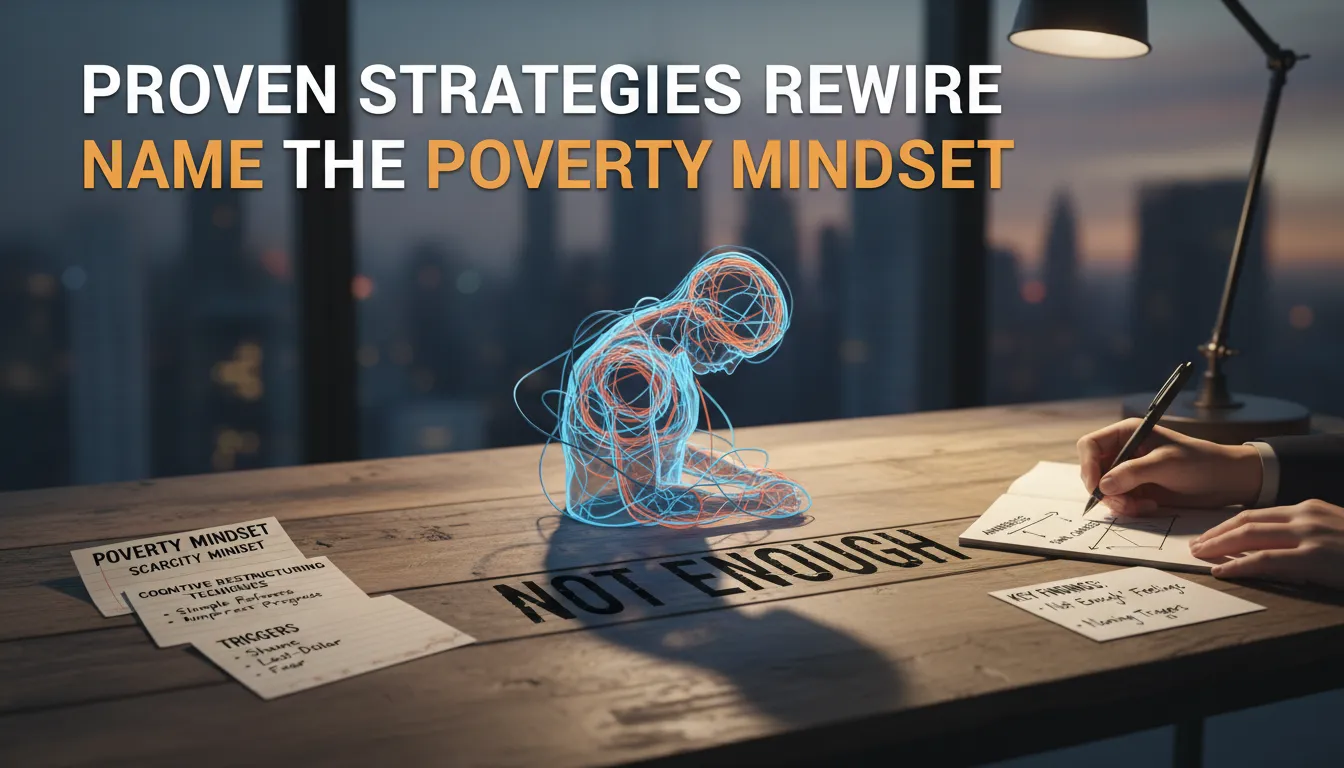
Poverty Mindset Stopping Game: Small Rituals That Rewire Behavior
Poverty is not just about money—it’s about what you believe. I learned that my poverty mindset wasn’t only in my bank account. It was in my reflexes: the panic spending, the “I’m behind” thoughts, the fear of trying. If you’re trying to figure out how to escape poverty—especially when generational poverty shaped your early life—small rituals can feel almost too simple. But that’s why they work. They create repeatable Behavioral Changes that slowly rewire your mindset.
Abundance Audits (2 Minutes, Daily)
My first move was Abundance Audits. Every day, for two minutes, I list three resources I already have. This shifts my attention from lack to assets, and it’s easy enough to repeat daily—so it sticks.
- Time: “I have 20 minutes tonight to apply for one job or learn one skill.”
- People: “I know one person I can ask for advice or a referral.”
- Skills: “I can write, organize, fix, cook, sell, or learn fast.”
When I do this daily, my brain stops scanning for danger and starts scanning for options. That’s the beginning of escaping scarcity thinking.
The 24-Hour Rule (A Pause That Saves Money)
The next ritual was The 24-Hour Rule: I wait 24 hours before any major, fear-driven purchase. Not every purchase—just the ones that come from stress, shame, or “I need this to feel okay.” Research and real life agree: delaying impulsive spending reduces loss from impulsivity and supports long-term goals.
I used this rule and saved myself from two impulsive buys in one month: a “limited-time” gadget and a pricey outfit I wanted because I felt behind. After 24 hours, the urgency faded, and I kept the money for bills and savings instead.
AccuTrain Team: "Future-self visualization and small rituals are practical steps that help build patience for long-term goals."
Micro-Investment Practice: Tiny Bets That Build Momentum
Micro-Investment Practice is where confidence grows. Micro-investments combine small financial moves with skill-building, so you learn by doing—without risking everything.
| Micro-investment | Example | What it builds |
|---|---|---|
| Money habit | $5/week into savings | Consistency + proof you can plan |
| Skill habit | A free online course | Better earning power over time |
| Network habit | One informational interview/month | Access to opportunities |
These rituals may look small, but they interrupt the old script of “nothing I do matters.” That’s how I started changing my behavior—and how the path out of poverty began to feel real.
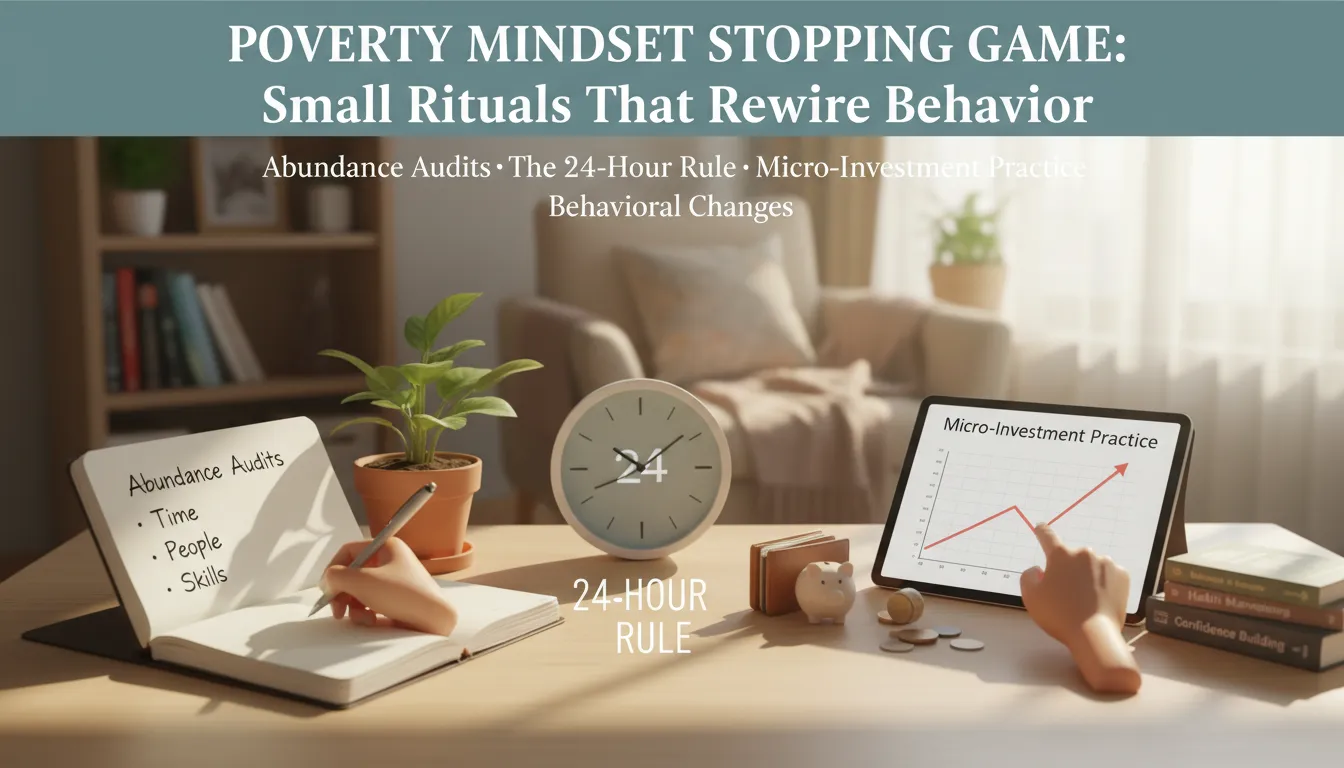
Teaching Optimism AccuTrain: Learn and Grow Systemically
Poverty is not just about money—it’s about what you believe. I learned that the hard way. When I was stuck in a poverty mindset, every choice felt like survival. But optimism isn’t “positive vibes.” It’s a skill I can train—on purpose—through systems that make growth easier, even in high-risk environments where stress (like during pandemics) can pull us back into scarcity.
PositivePsychology.com: "Scarcity mindset is a psychological challenge that can harm wellbeing; interventions improve focus and decision-making."
Financial Literacy Immersion (Short Modules That Actually Stick)
If you’re asking how to escape poverty, I start here: Financial literacy taught in small, practical steps. Research keeps showing that teaching financial skills early helps reduce scarcity thinking, because it replaces fear with clear actions. My favorite method is Financial Literacy Immersion—short lessons you repeat until they become normal.
- Budgeting: I keep it simple—income, needs, wants, and one small “future fund.”
- Understanding credit: I learned credit isn’t “free money,” it’s a tool with rules.
- Monthly money date: 30 minutes to check spending, plan bills, and set one goal.
I also use future self visualization because it has neuroscientific support: imagining my future life makes patience easier and helps long-term planning feel real, not fake. When I can “see” future me, I’m less likely to sabotage today me.
Professional Development & Internship Opportunities (Social Capital Changes Everything)
People talk about hard work, but they forget networks. Professional Development is not just resumes and interviews—it’s learning how opportunity moves. For many of us coming from generational poverty, we weren’t handed social capital. We have to build it.
I recommend Mentorship programs and Internship Opportunities because they do two things at once: they teach skills and they expand your circle. One mentor can introduce you to a new standard of living, a new career path, and a new belief about what’s possible.
- Pick one skill to grow (Excel, customer service, trades, coding, bookkeeping).
- Find one mentor (school, community center, workplace, online groups).
- Apply to internships—even unpaid short-term ones—if they lead to references and experience.
Educational Interventions (Teaching With Poverty, Not Against People)
When I think about “Teaching with poverty,” I think about learning environments that don’t shame stress responses. Trauma-informed classrooms matter because chronic stress can block focus, memory, and confidence. When schools and programs use trauma-informed practices, students from low-income backgrounds often learn better—and that reduces the poverty mindset loop.
| Intervention | What it Builds |
|---|---|
| Trauma-informed routines | Safety, consistency, better learning outcomes |
| Entrepreneurial thinking in schools | Problem-solving, ownership, income creativity |
| Community-based programs | Support, resources, and real-world practice |
To me, this is AccuTrain: a system that combines financial literacy immersion, strategic relationship building, and institutional support—so breaking generational poverty becomes repeatable, not random.
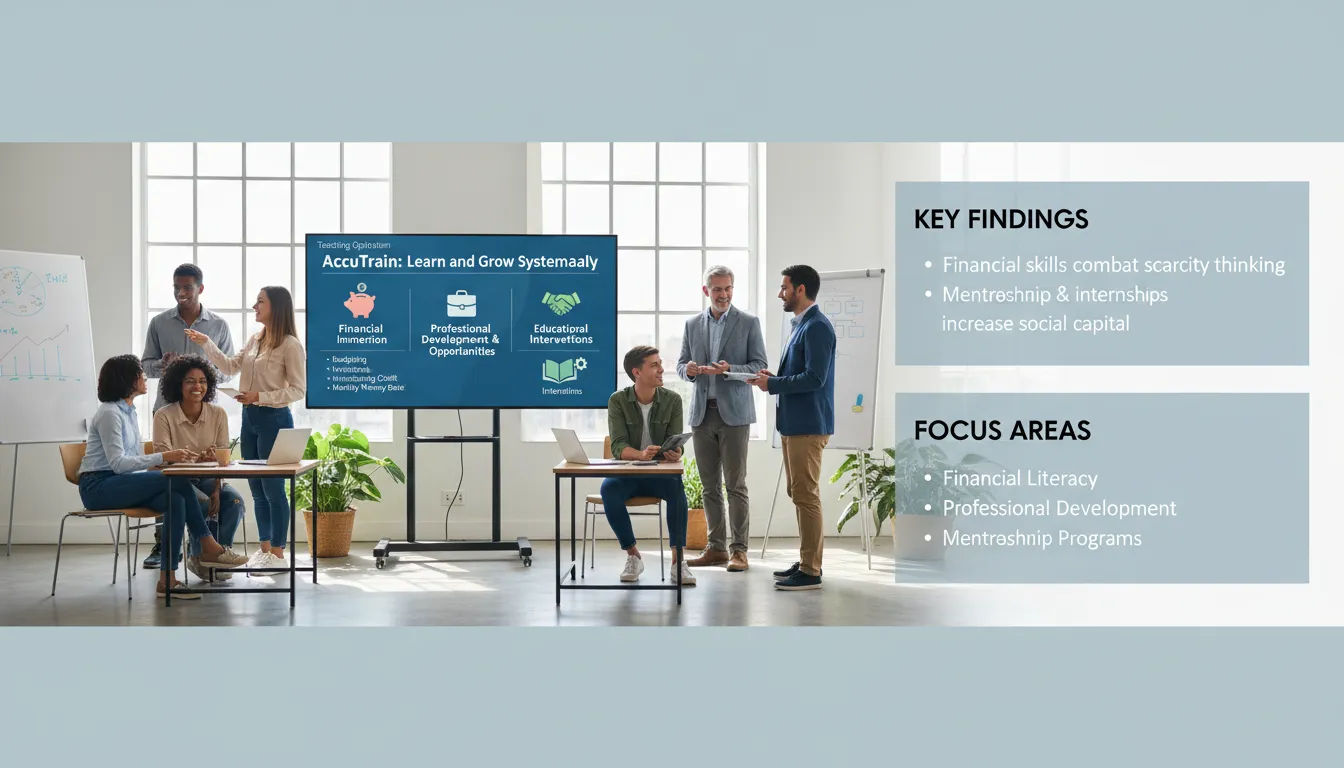
Transform Scarcity Mindset: Community & Institutional Changes
Poverty is not just about money—it’s about what you believe. For a long time, I thought the only way to change my poverty mindset was to “try harder” in private. But the deeper truth is this: mindset grows in an environment. If the environment stays the same, it keeps pulling you back into survival mode. That’s why learning how to escape poverty isn’t only personal—it’s also community and system work, especially when you’re trying to break generational poverty.
Strategic Relationship Building: I Learned to Network Imperfectly
I used to hear “networking” and feel sick. It sounded fake, like I had to become someone else to be accepted. What finally helped me was keeping it simple: ask for one favor, offer one skill. That’s it. One teacher who reviewed my resume. One neighbor who told me about a job opening. One friend I helped with childcare in exchange for interview practice. This kind of Strategic Relationship Building didn’t make me feel needy—it made me feel connected.
Here’s what I learned the hard way: strategic relationships create opportunities that mindset alone cannot conjure. You can believe in yourself all day, but if you don’t have access to information, referrals, and real support, you’re still stuck. Social capital is not a luxury; it’s a bridge from Scarcity to Sustainable stability.
Policy Advocacy & Institutional Changes: The Barriers Aren’t “All in Your Head”
Some parts of the poverty mindset come from repeated “no’s” that were never personal. Underfunded classrooms, unstable housing, low wages, and limited healthcare don’t just create stress—they train your brain to expect loss. That’s why Institutional Changes matter. Classrooms and communities need policy-level support to remove structural barriers, so people can actually use the tools they’re learning.
Jacqueline Wales: "Breaking free from poverty takes more than willpower—it's about changing environments and expectations."
Policy Advocacy can look small but powerful: showing up at a school board meeting, supporting job training funding, pushing for fair scheduling, or backing childcare and transportation programs. Community and policy shifts amplify individual efforts, and combining systemic change with personal practices offers the best chance to break generational cycles.
Creative Countermeasures That Build Real Pathways
When I think about moving from scarcity to sustainable abundance, I don’t picture a lone hero story. I picture a network. Local mentorship programs help people borrow confidence before they fully have it. Community savings groups turn “I can’t” into “we can.” Employer internships create a first step for people who were never given one. These are not “extras”—they are practical bridges out of generational poverty.
My conclusion is simple: if you want to overcome a poverty mindset, don’t do it alone. Build relationships on purpose, support institutional changes, and practice policy advocacy where you live. That’s how belief becomes momentum—and momentum becomes a new normal.
.png&w=256&q=75)