.png&w=1280&q=75)
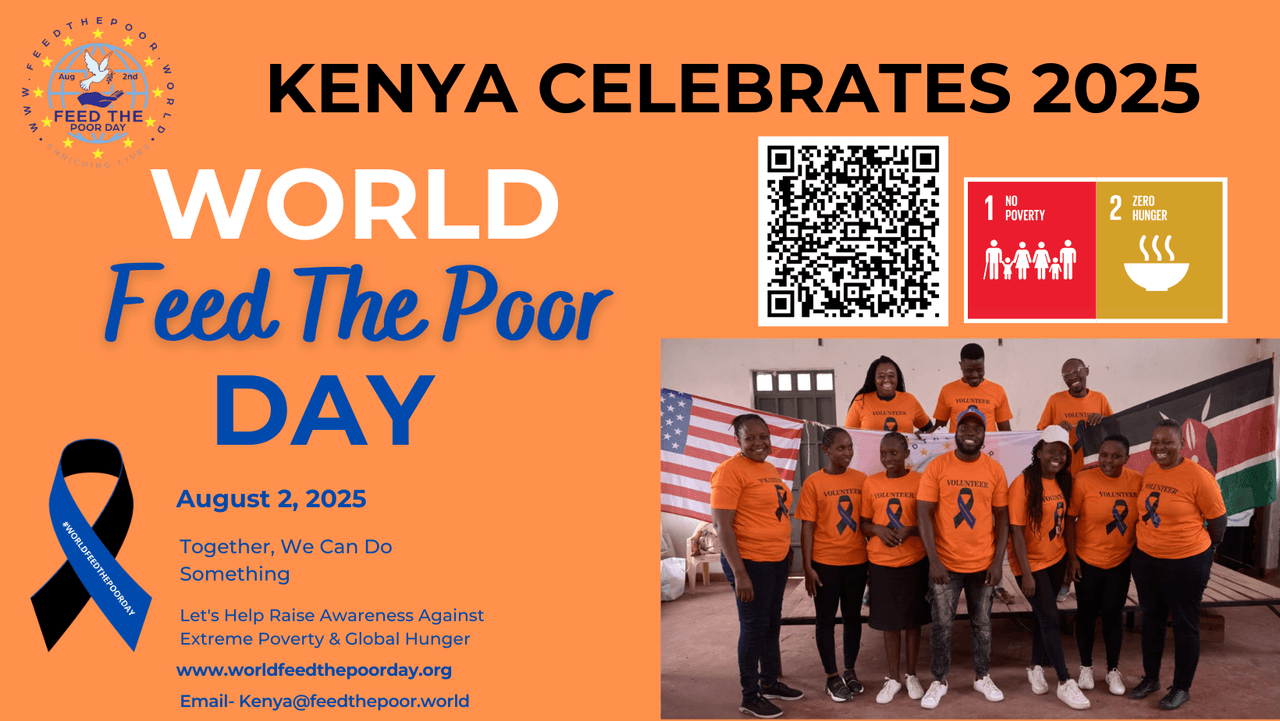
A few years ago, a young woman volunteered in Nairobi to make a difference. She accepted a call to serve those in need in her community. She put together other volunteers to join in helping the poor in Kenya. Lucy Mwangi is selfless in her approach to life. She joined Feed The Poor Foundation to extend the reach of World Feed The Poor Day to places never imagined. It was August 2nd, 2023, the sun was fierce, but laughter warmed the street more than the sky did. Local volunteers bustled about, handing out generous portions of ugali and sukuma to mark World Feed The Poor Day, a celebration that was somehow somber and joyous at once. What struck me was that no one seemed to be acting for the cameras; it was simply people feeding each other, neighbor by neighbor. Join me in uncovering what this day means in Kenya, and why ordinary acts can make an extraordinary difference.
Section 1: More Than Just a Plate: The People Power Behind Food Sharing
When I think about World Feed The Poor Day in Kenya, it’s never just about handing out a meal. It’s about the people, the energy, and the hope that fills the air every August 2nd. Since 2023, Nairobi has joined the world in marking this day, and at the center of it all is Lucy Mwangi. She’s not just an organizer; she’s a force that brings together neighbors, friends, and even strangers, all united by the simple act of sharing food.
Lucy Mwangi has become a familiar name in Nairobi’s community food distribution efforts. As the lead for World Feed The Poor Day in Kenya, she rallies volunteers from all walks of life. Some people arrive early to help cook, others set up tables, and a few even bring their children along to lend a hand. There’s no single way to help—everyone finds their place. The event is hands-on, direct, and deeply personal. I’ve seen people who have little to spare still show up with a bag of maize or a few loaves of bread, wanting to be part of something bigger.
World Feed The Poor Day isn’t just a date on the calendar. It’s a movement that’s grown from the ground up. The day itself, August 2nd, is followed by a Thanksgiving event on August 3rd, turning what could be a one-off act into a two-day celebration of hope and gratitude. The Feed The Poor Foundation’s mission in Kenya is simple: help the poor, fight hunger, and support the United Nations’ Sustainable Development Goals—especially those focused on ending poverty and hunger.
What strikes me most is how community food distribution in Nairobi has become more than just logistics. It’s about people stepping up, sometimes in unexpected ways. I remember one story that still makes me smile. During last year’s event, as volunteers were handing out food, a boda-boda rider pulled up with a stack of bread. No one had asked him to come. He just said he “didn’t want anyone left out.” That small act, unplanned and genuine, captured the spirit of World Feed The Poor Day better than any speech or slogan could.
Lucy Mwangi often says,
"Even if it is only one person that we can feed, we have done something."
I see the truth in that every year. The real power of Feed The Poor isn’t in big organizations or international headlines—it’s in the kitchens, the street corners, and the hands of ordinary people. Volunteers chop vegetables, stir pots, and serve meals, but they also share stories, laughter, and sometimes even tears. There’s a sense of unity that’s hard to describe until you’ve felt it yourself.
Research shows that community involvement is key in poverty relief. In Kenya, where hunger remains a daily struggle for many, local action makes a difference. The World Food Programme and other organizations provide essential support, but it’s the grassroots efforts—like those led by Lucy Mwangi—that fill the gaps and bring lasting change. During the COVID-19 pandemic, these local food distribution efforts became lifelines for families in informal settlements. Cash transfers and nutrition support helped, but so did the simple act of neighbors looking out for each other.
World Feed The Poor Day in Nairobi is a reminder that fighting hunger is not just about food. It’s about dignity, connection, and hope. Every August 2nd, I see people from different backgrounds come together, united by a common purpose. Some bring food, others bring time, and a few just bring a smile. The impact goes beyond the meal itself—it’s about showing up, caring, and believing that change is possible, one plate at a time.
Since Kenya began participating in World Feed The Poor Day in 2023, the event has grown in both size and spirit. The leadership of Lucy Mwangi has inspired many to get involved, and each year, the network of volunteers expands. It’s not always perfect—sometimes there’s not enough food, or the weather doesn’t cooperate—but the determination never fades. Every loaf of bread, every shared meal, and every act of kindness adds up. It’s a celebration, yes, but also a call to action.
Community food distribution in Nairobi is proof that hope can be built from the ground up. It’s not just about feeding the poor; it’s about feeding the spirit of a community determined to lift each other up. And that, to me, is what makes World Feed The Poor Day in Kenya truly special.
Section 2: The Dinner Table as a Battleground: Fighting Extreme Poverty and Food Insecurity
When I think about World Feed The Poor Day in Kenya, I see more than just a meal being served. This event, held every August 2nd, is a direct response to the United Nations’ Sustainable Development Goals—specifically SDG 1 (No Poverty) and SDG 2 (Zero Hunger). It’s not just about filling plates; it’s about fighting extreme poverty and food insecurity in Africa, one meal and one family at a time.
The dinner table, in this context, becomes a battleground. It’s where hope is served alongside food, and where hunger relief initiatives take on a personal, human face. Kenya’s hunger challenges are stubborn, especially in places like Nairobi’s informal settlements. But every food-sharing event, every act of kindness, feels like a tactical strike against the cycle of deprivation that so many families face.
Lucy Mwangi, who leads Kenya’s World Feed The Poor Day team, puts it simply:
“We see food as the first line of defense against poverty, not the last resort.”
That idea shapes everything about these community gatherings. It’s not just about giving out food. It’s about showing up for people who have been hit hardest by crises—think COVID-19, economic downturns, or ongoing instability. Research shows that during the pandemic, families in Nairobi’s poorest neighborhoods didn’t just receive meals. They also got information, encouragement, and a sense that someone cared enough to stand with them.
These events are part of broader hunger relief initiatives in Africa. Feed The Poor Foundation (FTP) supports Kenyan families with cash transfers and nutrition programs, especially in areas where food insecurity is most severe. But there’s something unique about the way World Feed The Poor Day brings people together. It’s a celebration, yes, but it’s also a statement: that fighting extreme poverty is everyone’s responsibility, and that progress happens when communities and global partners work side by side.
Let’s be honest—ending hunger and poverty isn’t easy. The Sustainable Development Goals set a high bar, and the reality on the ground can feel overwhelming. In Nairobi, for example, informal settlements are home to thousands of families who struggle daily to put food on the table. Hunger relief initiatives like Feed The Poor Foundation’s meal-sharing events offer a lifeline. They provide not just calories, but also dignity and hope.
I’ve seen how these gatherings can transform a neighborhood, even if just for a day. There’s laughter, conversation, and sometimes music. Children play while parents collect food parcels. Volunteers move quickly, making sure everyone is served. It’s a reminder that, even in the face of deep need, there’s room for celebration and connection.
The impact goes beyond the meal itself. Studies indicate that when families receive support—whether it’s food, cash, or nutrition education—they’re better able to weather future crises. They’re less likely to fall into deeper poverty. And perhaps most importantly, they feel seen. That sense of being recognized and valued can be just as nourishing as the food on their plates.
World Feed The Poor Day is a clear example of how local action can align with global goals. By focusing on Sustainable Development Goals 1 and 2, Kenya’s efforts contribute directly to the worldwide push to end hunger and fight extreme poverty. It’s not a perfect solution, and there’s always more work to do. But every shared meal, every act of generosity, is a step forward.
In the end, the dinner table becomes more than just a place to eat. It’s a symbol of what’s possible when people come together—across neighborhoods, cities, and even continents—to tackle food insecurity in Africa. The fight continues, but so does the hope.
Section 3: Unexpected Heroes and the Ripple Effect of a Shared Meal
When I think about World Feed The Poor Day in Kenya, I’m always struck by how its impact stretches far beyond the food distributed on August 2nd. The Feed The Poor Foundation, under Lucy Mwangi’s leadership, has made this event more than a single act of charity. It’s become a spark—one that ignites kindness in unexpected places and inspires people to carry the spirit of giving into their everyday lives. The ripples from a shared meal can travel further than we ever imagine.
Last year, I witnessed something that truly brought this idea home. After the main event in Nairobi, where volunteers handed out meals to families struggling with poverty, a local teacher approached me. She’d been moved by the sense of community and generosity she saw that day. A week later, she started a lunchtime sharing circle at her school. Now, every day, children gather to swap portions of their lunch and share stories. It’s a simple act, but it’s changed the way those kids see each other—and themselves. They’re learning that support for Feed The Poor isn’t just about one day, or one meal. It’s about building habits of kindness and empathy that last.
Research shows that local food sharing initiatives like these can spark lasting changes in community behavior. When people see their neighbors stepping up to help, it encourages them to do the same. Acts of kindness multiply, sometimes in ways we don’t expect. I’ve heard stories of families who, after receiving food on World Feed The Poor Day, started setting aside a portion of their own meals to share with others in their neighborhood. It’s a chain reaction, and it’s exactly what Nairobi poverty relief efforts need—sustainable, community-driven solutions that go beyond emergency aid.
The Thanksgiving Celebration Kenya holds on August 3rd is more than just a follow-up event. It’s a moment for reflection and gratitude. After the rush of distributing food and the excitement of World Feed The Poor Day, this is when people pause to give thanks—not just for what they’ve received, but for the chance to be part of something bigger. It’s a time to look back on the acts of kindness that have already happened, and to make new commitments for the future. In my experience, this annual Thanksgiving celebration deepens both personal and collective commitment to fighting hunger and poverty.
Lucy Mwangi, who leads the World Feed The Poor Day team in Kenya, put it best:
"If a meal changes one life, and that life inspires ten more, we’ve started a revolution."
That’s the heart of what we’re trying to do. The Feed The Poor Foundation coordinates these events, but the real power comes from the way people carry the message forward. Teachers, parents, children—each of them becomes an unexpected hero in their own way. They find creative ways to keep the spirit of giving alive, whether it’s through sharing circles at school, neighborhood meal swaps, or simply checking in on a neighbor in need.
Supporting Feed The Poor Foundation isn’t just about providing food for a day. It’s about joining a movement that seeks to address the root causes of hunger and poverty in Kenya. The United Nations’ Sustainable Development Goals remind us that ending poverty and hunger requires ongoing effort, not just one-time events. In Nairobi, where many families still face food insecurity, every act of sharing counts. Community food distribution, especially during crises like the COVID-19 pandemic, has shown us how powerful collective action can be.
As I reflect on this year’s World Feed The Poor Day and the Thanksgiving celebration that follows, I see hope. Not just in the meals handed out, but in the way people are inspired to keep giving, keep sharing, and keep caring. The ripple effect is real—and it’s growing. If you’re looking for a way to make a difference, consider supporting Feed The Poor Foundation. Your involvement could be the start of another ripple, another story, another revolution of kindness in Kenya.



.png&w=256&q=75)